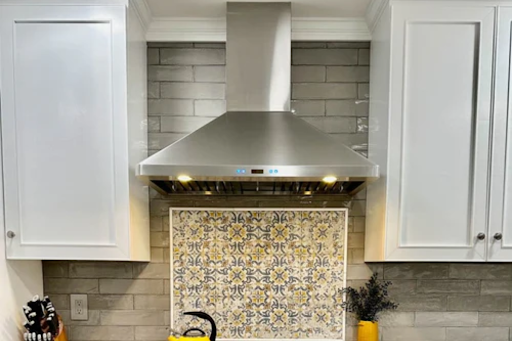
Kitchen ventilation removes smoke, grease, moisture, and airborne particles created during cooking. In larger kitchens, wider cooking surfaces often produce more heat and fumes, making proper ventilation important. A 48-inch vent hood offers broader coverage over large ranges and helps support cleaner air, better grease control, and improved comfort during everyday cooking. Proper ventilation can also help reduce lingering odors and protect surrounding surfaces from grease buildup. It supports a healthier indoor environment by improving airflow and managing excess kitchen humidity.
How Hood Size Affects Ventilation Performance
Vent hood size directly affects capture efficiency. A wider hood can collect smoke and vapors more effectively, especially when using multiple burners. Proper sizing helps prevent contaminants from escaping into the kitchen. Larger hoods also improve front-burner coverage, which is often a weak point in undersized systems installed over wider cooking appliances. Better coverage can also improve performance during high-heat cooking methods like grilling or searing. Choosing the right hood width helps create more consistent ventilation across the entire cooking surface.

Airflow Capacity and Capture Design Matter
Ventilation performance depends on more than width. Airflow capacity, capture depth, and hood design all influence effectiveness. Higher airflow can support heavy cooking, while deeper capture zones help contain rising smoke. A well-designed 48 inch vent hood balances size and airflow to improve performance without relying only on width for efficiency. Proper capture design can also help improve smoke containment from front burners during intense cooking. Balanced airflow supports more consistent ventilation across the full cooking surface. Evaluating these features together can lead to better long-term ventilation performance.
Why Ducting Influences Overall Results?
Even strong ventilation can underperform with poor ducting. Long duct runs, multiple turns, or restrictive materials can reduce airflow. Straight, properly sized duct paths usually improve efficiency. Installation quality often has as much impact as the hood itself, making duct planning an important factor when evaluating overall kitchen ventilation performance.

Benefits of Under-Cabinet Ventilation Options
Under-cabinet ventilation can work well in kitchens where preserving cabinetry matters. These systems offer a more integrated appearance while still supporting effective air removal when properly designed. Many homeowners choose them for retrofit projects because they can provide solid ventilation performance without requiring major structural changes or large decorative hood installations. They can also help maximize available space while maintaining a clean kitchen layout. Many models support powerful airflow despite their compact structure. Their flexible installation options make them practical for both renovations and existing kitchen upgrades.
Common Mistakes When Choosing a Vent Hood
A common mistake is selecting ventilation based only on appearance. Others choose size without considering airflow or duct requirements. Some underestimate their cooking demands, resulting in poor performance. Ignoring installation details can also reduce efficiency. Good ventilation decisions should balance size, airflow, design, and kitchen layout together for better long-term results. Another mistake is overlooking noise levels, which can affect daily comfort in the kitchen. Some also ignore maintenance needs, such as filter cleaning, which impacts long-term performance. Comparing features carefully before installation can help avoid costly ventilation issues later.
Conclusion
Choosing kitchen ventilation involves more than selecting a larger hood. Performance depends on proper sizing, airflow, capture design, and installation quality. A 48-inch vent hood can improve air quality and cooking comfort when matched to the space correctly. For some layouts, an exhaust hood under cabinet can also provide an efficient and practical ventilation solution. Proper planning also helps improve long-term efficiency and reduces issues caused by poor airflow or grease buildup. Understanding these factors can help homeowners choose a system that supports both performance and everyday kitchen functionality.