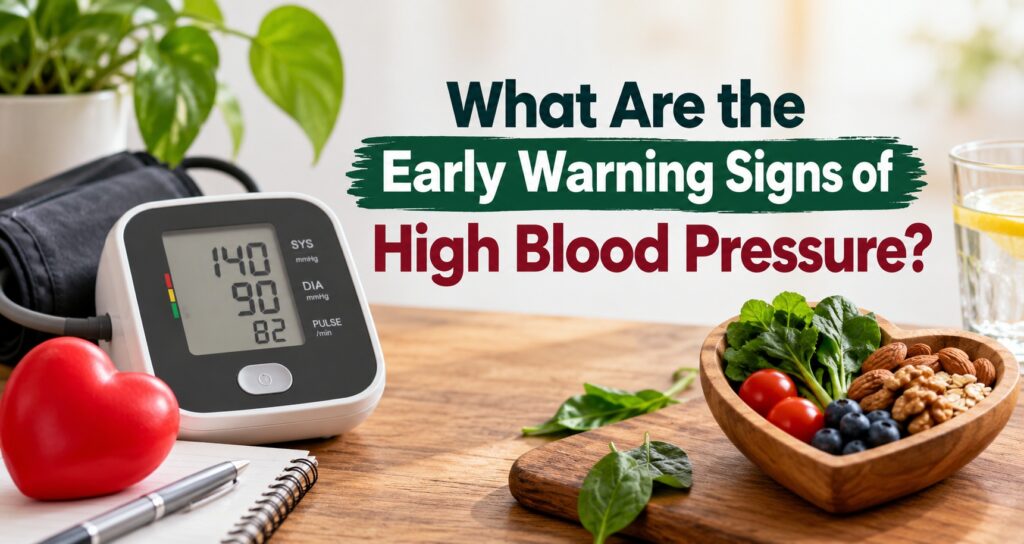
High blood pressure is one of those health problems that can be difficult to notice.
You may feel completely fine. You may go to work, exercise, eat normally, and sleep as usual. Yet your blood pressure could still be higher than it should be.
That is one reason hypertension is often detected during a routine health check rather than because someone notices a clear symptom.
The CDC says high blood pressure usually has no signs or symptoms, and measuring your blood pressure is the only way to know whether you have it.
So, are there early warning signs of high blood pressure?
Sometimes people with very high blood pressure can experience symptoms such as headache, vision changes, shortness of breath, chest discomfort, weakness, or difficulty speaking. But these symptoms are not reliable ways to diagnose hypertension.
The number on the blood pressure monitor matters.
Let’s look at the signs, numbers, risk factors, and situations where you should seek medical care.
What Is High Blood Pressure?
Blood pressure is the force of blood pushing against the walls of your arteries as your heart pumps blood around your body.
A blood pressure reading has two numbers:
- Systolic pressure is the upper number
- Diastolic pressure is the lower number
For example, a reading of 120/80 mm Hg has a systolic pressure of 120 and a diastolic pressure of 80.
Current CDC information defines high blood pressure as consistently at or above 130/80 mm Hg.
The American Heart Association uses these categories for adults:
| Blood Pressure | Systolic | Diastolic |
| Normal | Less than 120 | Less than 80 |
| Elevated | 120–129 | Less than 80 |
| Stage 1 hypertension | 130–139 | 80–89 |
| Stage 2 hypertension | 140 or higher | 90 or higher |
| Severe hypertension | Higher than 180 | and/or higher than 120 |
A healthcare professional should interpret your readings and confirm a diagnosis rather than relying on one isolated measurement.
Does High Blood Pressure Have Early Warning Signs?
This is where many people get confused.
High blood pressure usually does not produce noticeable symptoms.
You could have hypertension and feel perfectly normal.
That means waiting for a headache or dizziness before checking your blood pressure is not a good approach.
Regular blood pressure checks are much more useful.
A single high reading also does not automatically mean you have chronic hypertension. Blood pressure can change during the day because of activity, stress, illness, caffeine, and other factors.
If you get an unexpectedly high reading, repeat the measurement and discuss repeated high readings with a healthcare professional. The American Heart Association recommends keeping a record of readings when monitoring blood pressure at home.
Possible Symptoms When Blood Pressure Becomes Very High
Although most people with hypertension have no symptoms, very high blood pressure can occur with concerning symptoms.
These can include:
1. Severe Headache
A strong or unusual headache may occur when blood pressure becomes severely elevated.
But don’t assume every headache means your blood pressure is high.
Headaches have many possible causes, including dehydration, migraine, lack of sleep, stress, infections, and other medical conditions.
If a severe headache appears suddenly or comes with other concerning symptoms, medical assessment is important.
2. Changes in Vision
Sudden blurred vision, loss of vision, or other major changes in eyesight can occur with serious blood pressure-related problems.
Vision changes should not simply be blamed on tiredness or screen time.
A sudden change needs prompt medical attention, particularly when it occurs along with weakness, difficulty speaking, chest pain, or severe headache.
3. Shortness of Breath
Feeling short of breath can have many causes.
It may be related to a heart or lung problem, an infection, anxiety, or other conditions.
When very high blood pressure is accompanied by shortness of breath, it can be a sign of a serious situation.
4. Chest Pain
Chest pain should always be taken seriously.
High blood pressure increases the risk of cardiovascular problems over time, and severe hypertension can occur alongside serious heart-related conditions.
If chest pain occurs with very high blood pressure, particularly with breathlessness, weakness, sweating, or other new symptoms, seek urgent medical care.
5. Weakness or Numbness
Sudden weakness or numbness, especially on one side of the body, can be associated with a stroke.
Do not wait for the symptom to disappear.
This requires urgent medical assessment.
6. Difficulty Speaking
Sudden trouble speaking, understanding speech, or finding words can be a sign of a neurological emergency.
The American Heart Association lists difficulty speaking, weakness, numbness, vision changes, chest pain, shortness of breath, and back pain among symptoms that can occur with a hypertensive emergency when blood pressure is above 180/120 mm Hg.
Why Can High Blood Pressure Be Difficult to Detect?
Think about it this way.
If you have a toothache, you know something is wrong.
If you have a fever, you can usually measure it.
High blood pressure is different.
It can quietly affect the cardiovascular system without producing an obvious sensation.
Over time, uncontrolled hypertension can increase the risk of problems involving the heart, brain, kidneys, and eyes.
That is why regular health checks matter even when you feel healthy.
Who Should Pay Attention to Blood Pressure?
Anyone can develop high blood pressure.
Your risk may increase with factors such as:
- Increasing age
- Family history of hypertension
- Being overweight or having obesity
- Physical inactivity
- High sodium intake
- Excessive alcohol consumption
- Smoking
- Certain medical conditions
- Some medicines
- Long-term stress
Having one risk factor does not mean you will definitely develop hypertension.
It simply means paying attention to your blood pressure becomes more relevant.
How Do You Know If Your Blood Pressure Is High?
The simplest answer is to measure it.

You can have your blood pressure checked at a healthcare facility or use a validated home blood pressure monitor.
When measuring blood pressure at home, sit quietly with your back supported, keep both feet flat on the floor, and support your arm at heart level. Avoid talking during the measurement.
If the first reading is unexpectedly high, take another reading after waiting for a short period and record both numbers.
Keeping a blood pressure journal can also help your doctor identify patterns.
For example, you may notice that your readings are repeatedly higher at certain times of the day.
That information can be useful during a consultation.
What Should You Do If Your Blood Pressure Is High?
Don’t panic because of one reading.
Instead:
- Sit quietly for a few minutes
- Check your blood pressure again
- Record the reading
- Take note of the time
- Follow your healthcare professional’s advice
- Discuss repeated high readings with your doctor
If you already take blood pressure medicine, don’t stop or change the dose on your own.
Your treatment plan should be discussed with your healthcare professional.
What Does a Blood Pressure Reading Above 180/120 Mean?
A reading higher than 180/120 mm Hg is considered severe hypertension.
If you get such a reading, wait at least one minute and measure again. If it remains that high, contact a healthcare professional promptly.
The situation becomes an emergency when a reading above 180/120 mm Hg occurs with symptoms such as:
- Chest pain
- Shortness of breath
- Back pain
- Numbness
- Weakness
- Vision changes
- Difficulty speaking
These symptoms can indicate serious organ damage or another medical emergency. The American Heart Association advises emergency medical care in this situation.
How Can You Lower Your Risk of High Blood Pressure?
You cannot control every risk factor.
But several daily habits can help support healthy blood pressure.
Eat With Your Blood Pressure in Mind
Pay attention to the amount of sodium in your diet.
Try to include more:
- Vegetables
- Fruits
- Whole grains
- Pulses
- Nuts and seeds
- Lean protein sources
Limit highly processed foods that are often high in sodium.
You don’t have to change everything overnight. Start with one or two practical changes and build from there.
Stay Physically Active
Regular physical activity can support heart health and help manage blood pressure.
Choose activities that you can maintain, such as:
- Walking
- Cycling
- Swimming
- Strength training
- Other forms of moderate physical activity
If you have a medical condition or have been inactive for a long time, discuss an appropriate exercise plan with your healthcare professional.
Maintain a Healthy Weight
If you are overweight, even gradual weight loss may support better blood pressure control.
Focus on sustainable eating habits rather than extreme diets.
Avoid Smoking
Smoking affects the cardiovascular system and contributes to heart and blood vessel disease.
If you smoke, ask your healthcare professional about proven methods that can help you quit.
Manage Stress
Stress is part of everyday life.
Long-term stress can also make healthy habits harder to maintain.
Simple routines such as regular physical activity, adequate sleep, relaxation exercises, and spending time away from work can help you manage stress.
When Should You See a Doctor for High Blood Pressure?
You should discuss repeated high readings with a healthcare professional even if you feel fine.
You should also arrange a medical evaluation if:
- Your readings repeatedly fall in the hypertension range
- You have been told that your blood pressure is high
- You have risk factors for cardiovascular disease
- You are taking blood pressure medicine, and your readings remain high
- You develop new or unusual symptoms
Regular monitoring can help identify a problem before it causes more serious complications.
How Can a Multispeciality Hospital Help With High Blood Pressure?
Hypertension can sometimes involve more than one area of health.
A person with high blood pressure may also need assessment for heart health, kidney function, diabetes, cholesterol, or other related concerns.
This is one reason people may look for a multispeciality hospital when they need a broader medical evaluation.
If you are searching online for the Best Multispeciality Hospital in Nagpur, don’t look only at the hospital name.
Check practical factors such as:
- Availability of physicians and relevant specialists
- Emergency care
- Diagnostic services
- Blood pressure monitoring
- Cardiology support
- Laboratory services
- Pharmacy availability
- Appointment access
- Follow-up care
The right healthcare setting depends on your symptoms, medical history, and the type of care you need.
Frequently Asked Questions About High Blood Pressure
What are the first warning signs of high blood pressure?
There may be no warning signs at all. High blood pressure usually does not cause noticeable symptoms, which is why regular measurement is important.
Can high blood pressure cause headaches?
Very high blood pressure can occur with severe headaches, but a headache alone does not mean you have hypertension. Blood pressure should be measured rather than diagnosed based on symptoms.
Can dizziness mean high blood pressure?
Dizziness can have many causes and is not a reliable way to identify hypertension. If you experience repeated dizziness, discuss it with a healthcare professional.
Can you have high blood pressure and feel normal?
Yes. This is very common. Many people with hypertension have no symptoms and only discover it after a blood pressure measurement.
Take Your Blood Pressure Seriously, Even When You Feel Fine
The biggest challenge with hypertension is that you may not feel anything unusual.
That is exactly why checking your numbers matters.
Don’t wait for a headache or dizziness before paying attention to your blood pressure.
Keep track of your readings, follow your doctor’s advice, and make lifestyle changes that you can maintain.
And if you are researching a Best Multispeciality Hospital in Nagpur for blood pressure evaluation or ongoing care, look for a hospital that can provide appropriate medical consultation, diagnostic support, specialist care, and follow-up under one healthcare system.
Your blood pressure is just a number on a monitor, but it can tell you a lot about your cardiovascular health.