Choosing the right toys for a growing child can make playtime more enjoyable and meaningful. A good baby shop should offer toys that do more than keep children busy. The best toys help little ones explore, learn new skills, use their imagination, and become more confident as they grow. But what makes a toy truly useful? It is not always about how expensive, colorful, or advanced it looks. A useful toy is safe, easy to enjoy, suitable for a child’s age, and helpful for learning through everyday play.
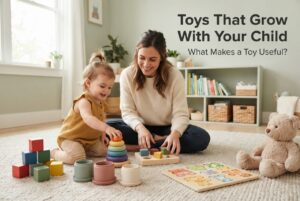

Children learn something new at every stage of life. Babies begin by looking, touching, and listening. Toddlers start moving around, building things, and solving simple problems. Older children enjoy creating, imagining, and trying new challenges. Choosing toys that support these changes can help parents make better decisions when shopping online for their children.
1. Toys Should Match a Child’s Age and Skills
One of the most important features of a useful toy is that it matches the child’s age and abilities. A toy should offer enough fun to keep a child interested without making play too difficult or frustrating.
Toys for Babies
Babies learn about the world through their senses. Soft toys, textured play items, baby-safe rattles, and simple activity toys can help them explore different sounds, shapes, and feelings.
For example, a baby may enjoy reaching for a colorful toy or holding a lightweight object. These simple activities encourage hand movements and help develop coordination.
Parents should always check the recommended age and safety instructions before choosing a toy for a baby.
Toys for Toddlers
Toddlers enjoy exploring and trying things independently. Stacking cups, large building blocks, shape sorters, and simple puzzles can help them practice problem-solving and hand-eye coordination.
A toddler might try to fit a shape into the correct opening several times before succeeding. This small activity teaches patience and encourages the child to keep trying.
Toys for Older Children
As children grow, they often become interested in more challenging activities. Building sets, craft materials, puzzles, pretend-play toys, and simple science kits can encourage creativity and independent thinking.
The right level of challenge helps children learn without making play feel like a lesson.
2. Safety Should Always Come First
A toy may look attractive, but safety should always be the first thing parents consider. This is especially important when choosing toys for babies and young toddlers, who often explore objects by putting them in their mouths.
Before buying a toy online, check its recommended age, materials, construction, and safety information.
Look for toys that:
-
Do not have sharp edges or dangerous points.
-
Are made from suitable, child-safe materials.
-
Have no loose parts that could create a choking risk.
-
Are strong enough for their intended use.
-
Can be cleaned according to the manufacturer’s instructions.
Small parts, loose magnets, and button batteries can be dangerous if swallowed. Toys with these components need particular care and must be kept away from children who are too young to use them safely.
Parents should also inspect toys regularly for cracks, broken pieces, or loose parts. Even a well-made toy may become unsafe if it is damaged.
3. A Good Toy Encourages Creativity
Children enjoy toys that allow them to make their own choices. Toys with only one way to play can be fun, but toys that support different activities may hold a child’s interest for longer.
Building blocks are a good example. A child can use the same blocks to make a tower, a house, a bridge, or an imaginary city. Each new idea creates another opportunity to explore.
Art supplies, play dough suitable for the child’s age, pretend-play sets, and construction toys can also encourage creative thinking.
Parents can support this learning by asking simple questions such as, “What are you building?” or “What else could you make with these pieces?”
There is no need to correct every idea or show children exactly what to do. Sometimes, the most useful part of play is allowing children to experiment and discover things for themselves.
4. Toys Should Help Children Learn New Skills
Useful toys often support more than one area of development. They can help children improve physical skills, thinking, communication, and social interaction.
Here are some examples of how different toys support learning:
-
Building blocks: Help develop hand control, balance, and problem-solving.
-
Puzzles: Encourage matching, observation, and logical thinking.
-
Musical toys: Introduce rhythm, listening, and sound recognition.
-
Pretend-play toys: Help children practice language, storytelling, and everyday activities.
-
Balls and movement toys: Encourage physical activity, balance, and coordination.
-
Drawing and craft materials: Support imagination and control of small hand movements.
Parents looking through an online baby store UAE collection can consider these benefits alongside a toy’s age recommendation and safety features. This makes it easier to choose items that suit a child’s current interests and abilities.
Remember that a toy does not need to teach an academic subject to be valuable. Playing, exploring, and interacting with others are also important parts of childhood learning.
5. Toys Should Keep Children Interested
A useful toy should be interesting enough for a child to return to it. However, children do not always need new toys to stay engaged.
Sometimes, a familiar toy becomes interesting again when a child discovers a different way to use it.

For example, building blocks may first be used for stacking. Later, a child might sort them by color, count them, or use them to create pretend buildings.
Toys with different uses can provide fresh experiences as a child’s skills develop. Simple toys are often especially useful because children can decide how to play instead of following a fixed set of instructions.
Parents can also rotate toys by keeping some out of sight for a while and bringing them back later. This can make familiar items feel interesting again without requiring frequent purchases.
6. Choose Toys That Support Independent Play
Independent play gives children opportunities to make choices, explore ideas, and learn to solve small problems on their own.
Toys such as blocks, simple puzzles, pretend-play figures, and age-appropriate art materials can help children practice these skills.
For example, a child might spend time working out how to build a taller tower without it falling over. During this activity, the child learns through trial and error.
Parents do not need to leave children completely on their own. Younger children still need supervision, and some activities are best enjoyed with an adult nearby. The goal is to give children enough freedom to explore while providing help when needed.
A useful toy should invite children to participate rather than do everything for them.
7. Durability and Easy Cleaning Matter
Children often use their favorite toys repeatedly. They may drop them, carry them around the house, or use them during different kinds of play. This makes durability an important feature.
Look for toys with sturdy construction and materials suitable for their intended use. Check product descriptions for care instructions, especially for toys that babies and toddlers handle frequently.
Easy-to-clean toys can be helpful for busy families. Plastic building blocks, washable play items, and toys with simple surfaces may be easier to maintain than items with many hard-to-reach areas.
However, not every toy needs to be washable. Soft toys and electronic toys may require different cleaning methods, so parents should follow the manufacturer’s instructions.
When browsing products on toysuae, consider the toy’s listed features, recommended age, materials, and care information before making a purchase. Reading these details helps parents decide whether a product is suitable for their child’s daily routine.
8. Think About Long-Term Value Before Buying
A useful toy does not have to be expensive. Its value depends on how safely and meaningfully a child can use it.
Before choosing a toy, ask yourself a few simple questions:
-
Is it suitable for my child’s age?
-
Does it support an activity my child enjoys?
-
Can it be used in more than one way?
-
Is it safe and easy to maintain?
-
Does it offer something different from the toys we already have?
These questions can help prevent unnecessary purchases and make online toy shopping more thoughtful.
It is also helpful to consider your child’s interests. One child may enjoy puzzles, while another may prefer music, movement, or pretend play. A toy that suits a child’s personality is more likely to become part of their regular playtime.
Parents do not need to buy every new toy they see. A small collection of safe, interesting, and suitable toys can offer plenty of opportunities for learning and fun.
9. The Best Toys Support Play With Others
Although independent play is valuable, playing with parents, siblings, and friends is important too.
Board games for suitable ages, building sets, pretend-play toys, and balls can create opportunities to share, take turns, communicate, and solve problems together.
For younger children, an adult can help by naming objects, describing actions, or joining in simple games. For example, stacking blocks together can become an opportunity to practice words such as “up,” “down,” “big,” and “small.”
As children get older, group activities can help them understand rules, listen to others, and manage small disagreements.
The best toy does not need to include advanced technology or complicated features to support social development. Often, a simple activity that brings people together is enough.
Conclusion
A useful toy does more than entertain a child for a few minutes. It supports learning, encourages creativity, builds confidence, and gives children opportunities to explore the world at their own pace.
When choosing toys, parents should consider age suitability, safety, durability, creative possibilities, and the skills a child is ready to develop. It is also important to remember that every child grows differently, so a toy that works well for one child may not interest another.
By choosing thoughtfully and allowing children to explore in their own way, parents can create a play environment that supports both fun and development. The goal is not to have the largest toy collection, but to choose toys that make everyday play more enjoyable, meaningful, and rewarding.
Frequently Asked Questions (FAQs)
1. What makes a toy useful for a growing child?
A useful toy is safe, suitable for the child’s age, and interesting to play with. It may support creativity, movement, communication, problem-solving, or other important skills.
2. Are simple toys better than electronic toys?
Simple toys can encourage children to use their imagination and make their own choices. Electronic toys can also be enjoyable, but parents should consider age suitability, safety, and whether the toy encourages active participation.
3. How can I choose the right toy for my baby’s age?
Check the recommended age, safety information, materials, and size of the toy. Choose items that match your baby’s current abilities and always follow supervision and care instructions.
4. How many toys does a child really need?
There is no fixed number. A small collection of varied, safe toys can provide many learning opportunities. Children’s interests, available space, and the types of play they enjoy are more important than the total number of toys.
5. Can the same toy be useful as a child grows?
Yes. Toys such as building blocks, stacking cups, and pretend-play items can support different activities at different ages. However, always check age recommendations and ensure that the toy remains safe as the child grows.
6. Why is toy safety so important?
Unsafe toys can cause injuries or choking, particularly in babies and toddlers. Checking age labels, inspecting toys for damage, and keeping small or hazardous parts away from young children helps reduce these risks.
7. What should parents consider when buying toys online?
Parents should check the product description, age recommendation, dimensions, materials, safety information, cleaning instructions, and return policy. Clear product information helps them make a more informed decision.