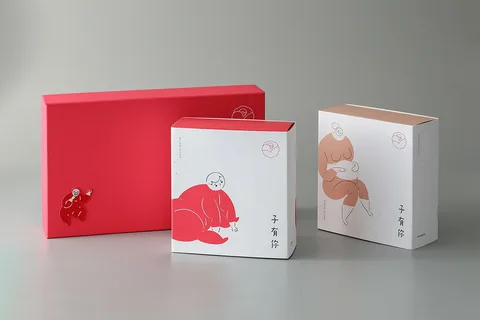
Breaking the Square Habit: Why Round Boxes and Book Sleeves Deserve a Place in Your Packaging Plan
Rigid Book Sleeves wrap a slim box in a decorative outer cover, giving it the look of a collectible volume on a shelf. Round Shaped Rigid Boxes do the opposite by dropping the corners altogether, which makes a product feel softer, more gift like and instantly memorable. Both formats help a brand stand out in a crowd of rectangles.
Why Most Premium Packaging Looks the Same
Walk through any beauty aisle or open a handful of subscription boxes and you will notice a pattern. Nearly everything arrives in a rectangle with a lid. It works, it is efficient and it is familiar, but familiarity is also the problem. When every box looks alike, none of them is remembered.

Shape is one of the fastest ways to change that. A customer registers the outline of a package before reading a single word on it. Choosing an unusual form gives your product a head start in attention, and it costs less creative effort than reinventing your entire brand identity.
Round Boxes: Soft Edges, Strong Impressions
What Makes Them Different
A round rigid box is built from a cylinder of thick board wrapped in paper, with a matching lid and base. There are no sharp corners, so the box feels gentle in the hand and photographs well from almost any angle. The circular lid also gives you a clean canvas for a logo, a pattern or a foil stamp placed right at the center.
Products That Suit the Shape
Round Shaped Rigid Boxes work especially well for items that are themselves cylindrical or compact: candles, perfume bottles, tea tins, skincare jars, macarons and flower arrangements. Florists have also embraced them for preserved blooms, because the lid frames the arrangement like a small stage.
Things to Plan For
Round construction takes more precision than a square build, so expect slightly higher production costs and ask about tolerances. Round boxes also waste space when packed into square cartons, which affects shipping efficiency. If you ship many units, consider how they will nest in the outer carton before you finalize the diameter.
Book Sleeves: A Cover for What Is Inside
How a Sleeve System Works
A sleeve is an outer jacket that slides over a smaller rigid box or tray. Rigid Book Sleeves take this idea further by giving the jacket a spine, a fore edge and printed cover art so the whole package resembles a hardcover on a bookshelf. When the customer slides the inner box out, the second reveal begins.
Why It Feels Special
The sleeve acts as a storytelling layer. You can use the cover for a title, an illustration or a pattern, while the inner box stays clean and elegant. This makes the format a favorite for stationery brands, tea and chocolate collections, fragrance discovery sets, journals and limited edition gift releases.

It also doubles as protection. The sleeve shields the inner box from scuffs during shipping, so the surface the customer eventually holds still looks fresh.
Where Brands Slip Up
The most common mistake is a sleeve that fits too tightly or too loosely. A tight sleeve scratches the inner box every time it moves, while a loose one slides off in transit. Always test the pairing with the actual product weight, not just an empty mockup.
The Numbers Behind Presentation
If you are weighing the extra cost of an unusual format, a consumer study from Dotcom Distribution is worth knowing. It reported that 40 percent of online shoppers would be more likely to share a photo of a purchase that arrived in premium packaging. A distinctive shape or a clever sleeve is exactly the kind of detail people want to post, which turns your packaging into free word of mouth.
Matching the Format to Your Product
Rather than choosing by style alone, work through a short checklist:
- Product shape: Round items sit naturally in round boxes. Flat or rectangular goods suit sleeves.
- Story: If you have a narrative or a series, a sleeve gives you a cover to tell it on.
- Budget: Round builds and printed sleeves both cost more than a basic square box, so set your ceiling early.
- Shipping: Check how each format packs into cartons and whether a mailer is needed.
- Reuse: Both formats are good keepsakes, which extends the life of your brand in the customer’s home.
Common Questions
Can I combine a round box with a sleeve?
Yes, though it takes careful engineering. A round box inside a curved or wrapped sleeve is possible, but it is more complex than a rectangular pairing. Ask your supplier for a structural sample before committing.
Are round boxes more expensive than square ones?
Usually a little, because the forming process is more precise and material yield can be lower. The difference varies by size, finish and quantity, so request quotes for both shapes with identical specifications.
What finishes work best on these formats?
Matte lamination, soft touch coating, foil stamping and embossing all look good on both. Keep the design simple on round lids, since fine detail can distort around the curve.
Final Thoughts
The best packaging makes people curious before they open it. Rigid Book Sleeves create a layered reveal with a collectible feel, while Round Shaped Rigid Boxes turn a familiar product into something that looks designed for gifting. Start with samples, test them with your real product, and choose the format that gives your customers a reason to pause and smile.