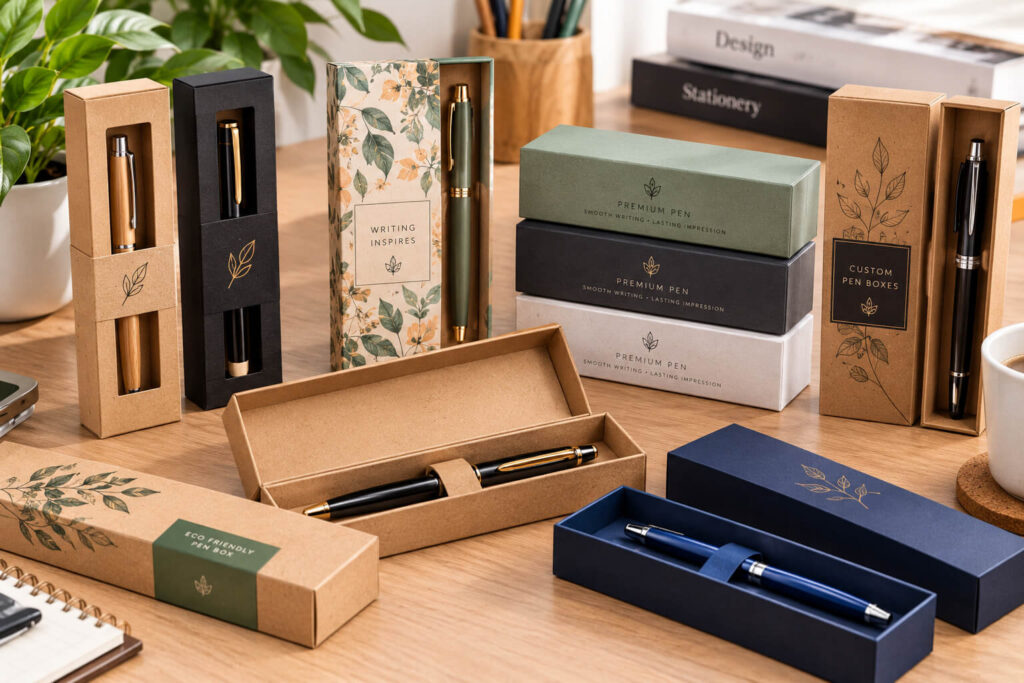
A pen is a slim, precise object, and a carton that lets it slide can scratch the barrel or bend a clip before it is ever used. Buyers of gift pens, school sets and promotional stationery notice a loose fit immediately. Planning cardboard pen packaging around how a pen sits and moves, not just how the sleeve looks, keeps every piece clean and ready to present. These checks suit stationery brands, corporate gift sellers and small makers.
Measure the Pen Exactly
Lay the pen flat and measure its full length, including the clip and cap. Then measure the widest point of the barrel, which is often the clip or a grip ring.

Write the numbers down in the same order every time. A few millimetres of error is enough to make a long, thin item rattle inside its carton.
Stop Rolling and Sliding
Round barrels roll, and slim cartons let a pen slide end to end. A shaped tray, a slotted card or a pair of end supports holds the pen still.
Fill a sample, close it and tilt it slowly from side to side. Listen for tapping and look for the pen shifting toward either end.
Protect Finishes and Clips
Metallic paint, lacquer and polished clips scratch easily. Check that the insert touches the pen only where it must, and that nothing rubs the barrel when the carton is shaken.
Carry a filled sample in a bag for a day, then inspect the pen under a bright lamp. Any fine marks point to a tighter or softer insert.
Choose a Style That Suits the Sale
A slim tuck box suits a single pen, while a hinged or sleeve-and-tray carton feels better for gifts. Sets of two or three need a tray with a separate slot for each pen.
Open and close a sample ten times and check that the lid lines up and the folds stay clean. A window can show the pen, but test that the film stays clear and does not touch the finish.
Print and Labelling
Long, narrow panels leave little room, so choose a short name and one simple mark. Read the smallest wording from arm’s length and rub the print with a dry cloth, then a slightly damp one. Rules for labels, material statements and claims differ by region, so check the current requirements for each market you sell in. This is general information, not legal advice.
Four Details to Confirm Before You Request a Quote
Have these ready so quotes match your real product:
- The pen’s full length, widest diameter, and weight, including the clip
- How many pens each carton must hold and how they should sit
- The style you prefer, such as a tuck box, a sleeve or a tray with a lid
- Your first order quantity and expected reorder schedule
Working With a Printer That Tests With Your Real Pens
A slim item shows fit problems quickly, so a real trial matters. At The Custom Printers, you send in your pens, request samples and check the fit, insert and print with the product inside. You review the results before anything goes into production, so changes stay quick and inexpensive. That sample-led routine makes it simpler to settle on cardboard pen packaging that holds every pen steady and looks neat on a desk or shelf.
A good pen carton is snug, scratch-free, and easy to open. Measure carefully, test the insert and keep photos of every sample round. When you are ready to compare options, The Custom Printers can help you work through the details with your own pens in hand.

Counter Display Boxes That Work for Both the Shopper and the Delivery Driver
A counter stand has to survive two audiences: the customer who lifts one item at the till, and the driver who hauls a stack of cartons into the back room. Many designs please one and fail the other. Planning counter display boxes around the delivery route as well as the till helps your stand arrive neat and sell well once it is placed. These checks suit brands supplying cafes, pharmacies, gift shops and small convenience stores.
Start at the Delivery Door
A display is first judged when the outer carton is opened. If the stand arrives crushed, scuffed or hard to find among other stock, the shop’s first impression is already poor.
Ask a friend to receive a sample parcel and photograph it on arrival. Look at the corners, the printed front and the folds before anything is set up.
Pack Flat Displays So Folds Survive
Many stands ship flat to save freight, so each crease must handle pressure. Pack ten samples as a full order would travel, post them and check the fold lines for cracking.
If damage appears, ask about firmer board or a paper sheet between each unit. Small packing changes cost far less than replacing stands.
Label the Outer Carton Clearly
Busy back rooms hold many deliveries at once. Ask for an outer label showing the product name, the quantity and a short note such as “open this side up”.
Hand a labelled carton to someone unfamiliar with it and see whether they can find the stand and set it up without help.
Check the Handover From Box to Counter
Time how long it takes to build a sample from flat and place it at the till. Aim for under a minute and no tools. Fill it, then give the top corner a gentle push at full, half and nearly empty to test stability.
Rub the printed front with a dry cloth, then a slightly damp one, and check that the ink holds. Rules for product claims, price marks and labelling differ by region, so check the current requirements for your market. This is general information, not legal advice.
Four Details to Confirm Before You Request a Quote
Have these ready so every supplier quotes the same job:
- The width and depth of the counter space available
- The size, weight and number of items the stand must hold
- Whether stands ship flat and how many go in each outer carton
- Your first order quantity and the number of shops you plan to supply
Working With a Printer That Tests the Journey From Parcel to Till
A display proves itself from delivery to daily trade. At The Custom Printers, you send in your product, request samples and test the shipping, setup and counter behaviour as a shop would. You review the results before anything goes into production, so changes stay quick and inexpensive. That sample-led routine makes it simpler to settle on Counter Display Boxes that arrive intact and stay steady.
A good stand survives the road and earns its place at the till. Test the parcel, time the setup and keep photos of every sample round. When you are ready to compare options, The Custom Printers can help you work through the details with your own products in hand.