7 HR Tasks That Can Be Fully Automated Using HRMS
Human Resource departments are no longer limited to handling paperwork and maintaining employee records. In today’s fast-paced business environment, HR teams are expected to improve employee experience, ensure compliance, support workforce productivity, and contribute strategically to business growth. However, many organizations still rely on manual HR processes that consume time, increase errors, and reduce operational efficiency.
This is where HRMS software plays a transformative role.
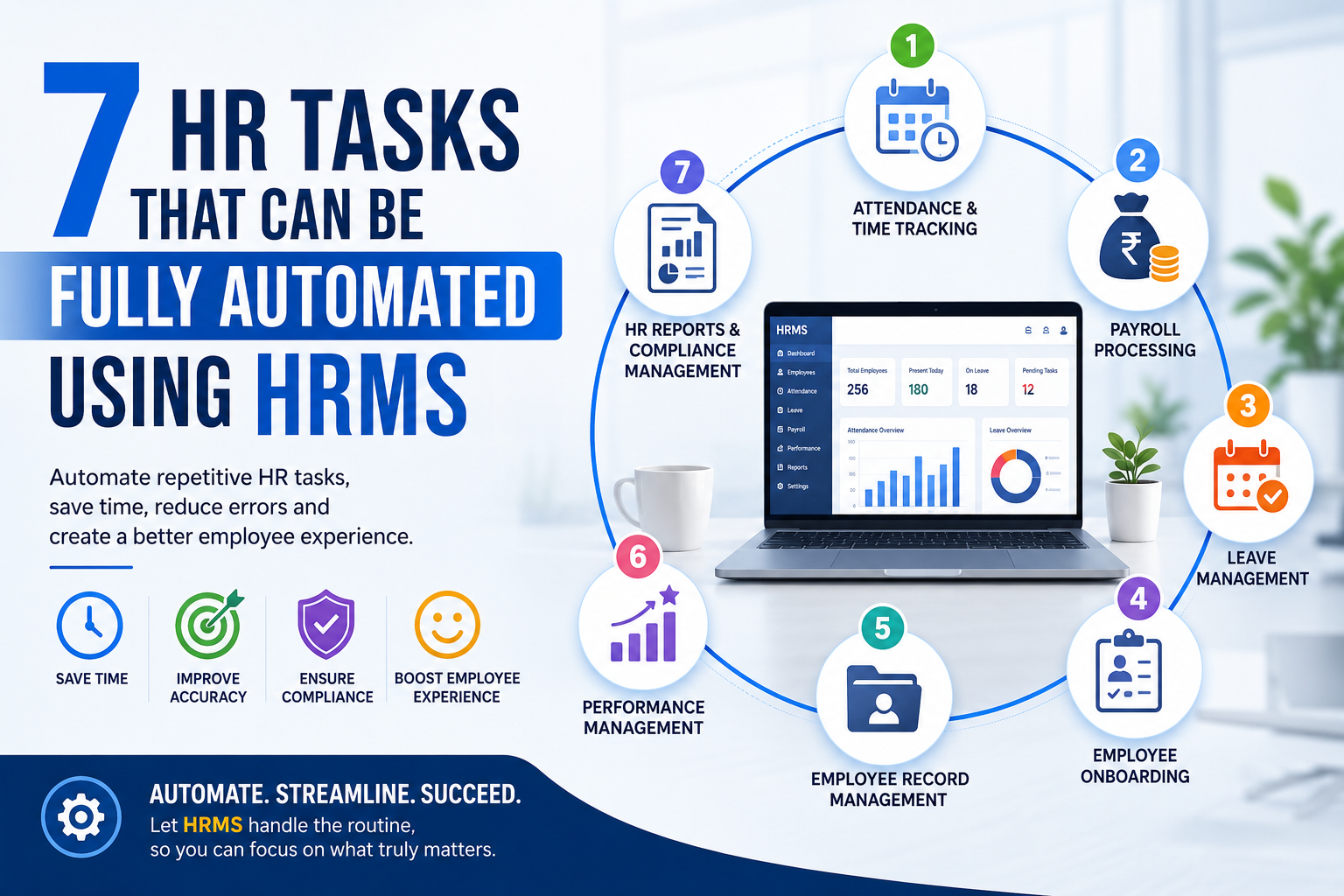
A modern Human Resource Management System (HRMS) helps businesses automate repetitive HR activities, streamline workflows, and centralize workforce management. From attendance tracking to payroll processing, HR automation reduces administrative burden and allows HR professionals to focus on strategic tasks instead of manual operations.
In this article, we’ll explore seven HR tasks that can be fully automated using HRMS software and understand how automation improves efficiency, accuracy, and employee satisfaction.
What is HRMS Automation?
HRMS automation refers to using technology to manage and automate routine HR processes with minimal manual intervention. Instead of relying on spreadsheets, paperwork, or disconnected systems, businesses can use HRMS software to handle various HR operations from a centralized platform.
Modern HRMS solutions integrate multiple HR functions, including:
- Payroll management
- Attendance tracking
- Leave management
- Recruitment
- Employee onboarding
- Performance management
- Compliance management
- Employee self-service
Automation eliminates repetitive tasks, reduces errors, and speeds up HR operations.
Why HR Automation is Important
As businesses grow, managing HR processes manually becomes increasingly difficult. HR teams often spend hours handling repetitive administrative work, leaving little time for strategic initiatives.
Manual HR management can lead to:
- Payroll errors
- Delayed approvals
- Attendance discrepancies
- Compliance risks
- Employee dissatisfaction
- Data duplication
- Poor record management
HR automation helps organizations overcome these challenges while improving overall workforce efficiency.
Key Benefits of HRMS Automation
- Saves time and operational costs
- Reduces manual errors
- Improves payroll accuracy
- Enhances employee experience
- Strengthens compliance management
- Provides real-time workforce insights
- Improves productivity and efficiency
Now let’s look at the HR tasks that can be fully automated using HRMS software.
1. Attendance and Time Tracking
Attendance management is one of the most repetitive and time-consuming HR activities. Traditional attendance systems often rely on manual registers, spreadsheets, or standalone systems that create inaccuracies and administrative challenges.
Common attendance management problems include:
- Incorrect attendance entries
- Buddy punching
- Overtime calculation errors
- Shift management difficulties
- Missing attendance records
- Remote employee tracking issues
Manual attendance tracking becomes even more challenging in hybrid and remote work environments.
How HRMS Automates Attendance Management
Modern HRMS software automates attendance tracking using advanced technologies such as:
- Biometric integration
- Facial recognition attendance
- Mobile attendance systems
- GPS tracking
- Geofencing
- Shift scheduling automation
The software automatically records employee working hours and synchronizes attendance data with payroll systems.
Benefits of Attendance Automation
- Accurate attendance tracking
- Reduced payroll disputes
- Elimination of manual entries
- Better shift management
- Real-time workforce monitoring
- Improved transparency
Automation ensures employees are paid accurately based on actual working hours.
2. Payroll Processing
Payroll processing is one of the most critical HR functions. Even small payroll mistakes can lead to employee dissatisfaction and compliance issues.
Manual payroll processing often causes:
- Incorrect salary calculations
- Delayed salary payments
- Tax deduction errors
- Compliance issues
- Incorrect overtime calculations
- Payroll data duplication
Handling payroll manually becomes increasingly difficult as organizations scale.
How HRMS Automates Payroll
HRMS software automates the complete payroll workflow, including:
- Salary calculations
- Tax deductions
- PF and ESI calculations
- Bonus and incentive management
- Reimbursements
- Payslip generation
- Bank transfer processing
The system integrates attendance, leave, and payroll data automatically to ensure accurate salary calculations.
Benefits of Payroll Automation
- Faster payroll processing
- Error-free salary calculations
- Better statutory compliance
- Reduced HR workload
- Timely salary disbursement
- Improved employee trust
Automation also helps businesses stay updated with changing payroll regulations and labour laws.
3. Leave Management
Managing employee leave manually can quickly become complicated, especially in organizations with multiple leave policies and departments.
Common leave management issues include:
- Incorrect leave balances
- Delayed leave approvals
- Policy confusion
- Leave tracking errors
- Payroll deduction mistakes
Employees often depend heavily on HR teams for leave-related queries.
How HRMS Automates Leave Management
HRMS software automates leave workflows through:
- Online leave applications
- Automated approval workflows
- Real-time leave balance tracking
- Holiday calendar integration
- Leave policy configuration
- Auto-updated attendance records
Employees can apply for leave through self-service portals, while managers can approve or reject requests instantly.
Benefits of Automated Leave Management
- Faster leave approvals
- Accurate leave records
- Better policy implementation
- Reduced HR dependency
- Enhanced employee experience
Automation simplifies leave management while maintaining transparency across the organization.
4. Employee Onboarding
The onboarding process creates the first impression for new employees. Manual onboarding often involves excessive paperwork and coordination delays.
Traditional onboarding challenges include:
- Repetitive documentation
- Delayed employee setup
- Incomplete records
- Communication gaps
- Slow onboarding experience
Inefficient onboarding can negatively affect employee engagement and productivity.
How HRMS Automates Employee Onboarding
HRMS software streamlines onboarding by automating:
- Offer letter generation
- Document collection
- Employee profile creation
- E-signature workflows
- Task assignments
- Policy sharing
- Training schedules
New hires can complete onboarding tasks digitally before their joining date.
Benefits of Automated Onboarding
- Faster onboarding process
- Reduced paperwork
- Better employee experience
- Improved documentation management
- Faster employee productivity
Automation helps organizations create a smooth and professional onboarding experience.
5. Employee Record Management
Maintaining employee records manually using spreadsheets or paper files increases the risk of data loss and inaccuracies.
Organizations often struggle with:
- Duplicate records
- Missing employee documents
- Data inconsistency
- Security concerns
- Time-consuming record retrieval
As workforce size increases, managing employee data manually becomes highly inefficient.
How HRMS Automates Employee Record Management
HRMS software centralizes employee information in a secure cloud-based database. The system automatically updates employee data across all HR modules.
The software stores:
- Personal information
- Salary details
- Attendance records
- Tax information
- Compliance documents
- Performance history
Authorized users can access information instantly whenever required.
Benefits of Automated Record Management
- Centralized employee database
- Improved data accuracy
- Faster document retrieval
- Better data security
- Reduced paperwork
- Simplified HR operations
Automation improves workforce visibility and eliminates repetitive administrative tasks.
6. Performance Management
Traditional performance management processes are often inconsistent, time-consuming, and difficult to track effectively.
Common challenges include:
- Delayed performance reviews
- Lack of continuous feedback
- Poor goal tracking
- Subjective evaluations
- Manual appraisal calculations
Manual performance management systems limit employee development opportunities.
How HRMS Automates Performance Management
HRMS software automates performance management using:
- KPI tracking
- Goal-setting systems
- Automated appraisal cycles
- Continuous feedback tools
- Performance analytics
- Employee review workflows
Managers and employees can track performance progress in real time.
Benefits of Performance Automation
- Transparent appraisals
- Continuous employee feedback
- Better productivity tracking
- Data-driven evaluations
- Improved employee engagement
Automation creates a structured and measurable performance management process.
7. HR Reporting and Compliance Management
Generating HR reports manually can consume significant time and increase compliance risks.
Organizations often face challenges related to:
- Labour law compliance
- Tax reporting
- Audit preparation
- Workforce analytics
- Attendance reporting
Manual compliance management increases the risk of penalties and legal issues.
How HRMS Automates Compliance and Reporting
HRMS software automatically generates:
- Payroll reports
- Attendance summaries
- Compliance documents
- Tax reports
- Employee analytics dashboards
- Audit-ready records
Modern HRMS platforms also update statutory compliance rules automatically based on government regulations.
Benefits of Automated HR Reporting
- Real-time workforce insights
- Faster report generation
- Better decision-making
- Reduced compliance risks
- Improved audit readiness
Automation simplifies compliance management while helping businesses stay legally compliant.
How HRMS Automation Improves Employee Experience
HR automation not only benefits HR teams but also significantly enhances employee satisfaction.
Modern HRMS software provides employee self-service portals where employees can:
- Download payslips
- Apply for leave
- Check attendance records
- Update personal information
- Access tax documents
- Track performance goals
Employees gain more transparency and independence, reducing dependency on HR departments for routine tasks.
Signs Your Business Needs HR Automation
Your organization may need HRMS automation if you experience:
- Frequent payroll errors
- Delayed salary processing
- Excessive HR paperwork
- Difficulty managing remote employees
- Compliance challenges
- Poor employee data management
- Increasing HR workload
As businesses scale, automation becomes essential for maintaining operational efficiency and workforce control.
Final Thoughts
HR departments today are expected to handle complex workforce operations efficiently while improving employee experience and maintaining compliance. Manual HR processes can no longer meet the speed and accuracy modern organizations require.
HRMS software helps businesses automate repetitive HR tasks, reduce administrative burden, improve accuracy, and streamline workforce management. From payroll processing and attendance tracking to onboarding and performance management, automation allows HR professionals to focus on strategic business goals instead of routine operational tasks.
Organizations that adopt HR automation gain a competitive advantage through improved efficiency, better compliance, and enhanced employee satisfaction.
As workplace expectations continue evolving, investing in a modern HRMS solution is no longer optional — it has become a necessity for sustainable business growth.
Read More: https://searchies.online/