A well-designed business environment does more than look professional. It helps customers understand a brand, guides visitors through a building, and creates a comfortable experience for employees. From corporate offices and retail stores to healthcare facilities, hotels, and commercial buildings, signage plays an important role in making indoor spaces organized and welcoming.
In a competitive business market like Miami, companies need effective ways to communicate their identity while making their premises easier to navigate. Professional interior signs can display brand messages, identify departments, highlight important areas, and help visitors find their destinations without confusion. These signs also contribute to a consistent visual identity across different parts of a workplace.
Whether a business operates in Downtown Miami, Brickell, Coral Gables, Doral, or Miami Beach, investing in well-planned indoor signage can support stronger branding and better day-to-day operations. By combining attractive designs with clear messaging, businesses can create interior environments that reflect their values and serve the needs of customers, employees, and visitors.
How Interior Signs Strengthen Business Branding
Branding extends beyond a company logo or website. Every part of a commercial space can influence how people perceive a business, including its reception area, meeting rooms, hallways, and customer service spaces.
Interior signage provides an opportunity to bring brand elements into the physical environment. Consistent colors, typography, logos, and messaging help create a recognizable appearance throughout a facility.
Creating a Professional First Impression
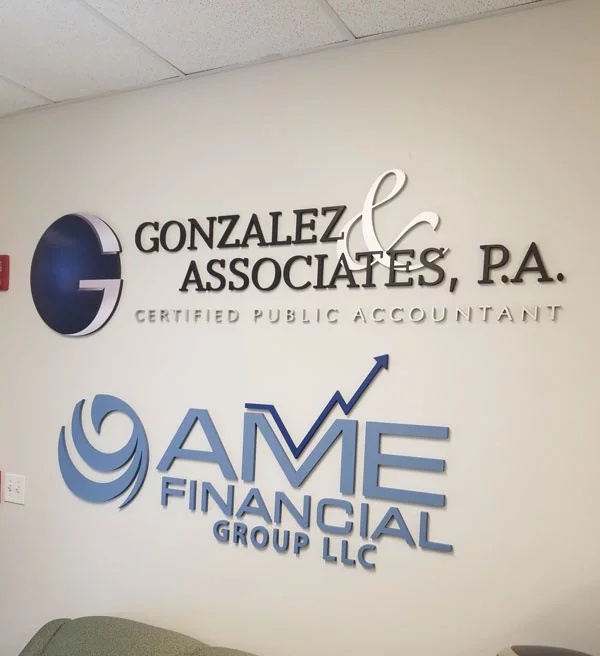
The reception area is often the first place customers, business partners, and prospective employees encounter a company’s identity. A professionally designed logo sign or dimensional lettering behind the reception desk can make the space look organized and established.
For offices in Brickell’s commercial districts or professional service businesses in Coral Gables, a carefully designed entrance can communicate attention to detail before a meeting even begins.
Businesses can choose from dimensional letters, acrylic panels, metal lettering, illuminated displays, and other options based on their brand identity and interior design. The right solution should complement the surroundings while keeping the company name easy to recognize.
Maintaining Consistent Brand Identity
Consistency is important when customers interact with a business across multiple locations or departments. Signage that follows established brand guidelines helps connect different spaces visually.
For example, a retail business may use consistent colors and typography across its product departments, fitting rooms, service counters, and employee-only areas. A corporate office might use matching designs for reception signs, conference room identification, and department directories.
When businesses plan Interior Signs in Miami, they should consider how each sign contributes to the overall brand experience. A coordinated signage system can make the workplace feel more unified and reinforce the company’s identity throughout the building.
Improving Workplace Navigation and Visitor Experience
A visually attractive interior is valuable, but people must also be able to move through it easily. Clear directional and identification signs reduce uncertainty and help visitors reach the correct destination.
This is particularly important in large offices, medical facilities, hotels, educational buildings, and multi-tenant commercial properties where unfamiliar visitors may need to locate specific rooms or services.
Making Wayfinding Simple and Efficient
Wayfinding signs help people understand where they are and how to reach their destination. Depending on the building layout, these signs may include directional arrows, floor directories, room numbers, department names, and identification for shared facilities.
For example, a visitor entering a commercial office building in Downtown Miami may need directions to a particular suite, conference room, or reception desk. Clear signs placed at entrances, elevators, hallways, and intersections can make the journey easier.
Effective wayfinding should follow a logical sequence. Signs need to appear before visitors reach a decision point, rather than after they have already passed the correct turn. Simple wording, readable fonts, and appropriate contrast also make directions easier to understand.
Helping Employees Navigate the Workplace
Employees benefit from clear signage just as much as visitors do. In larger workplaces, identification signs can help staff locate meeting rooms, departments, supply areas, break rooms, and shared facilities.
This becomes especially useful when companies expand, reorganize departments, or introduce flexible office layouts. Consistent room identification and directional signage can help new employees become familiar with the premises more quickly.
Businesses in Doral, Miami Beach, and other surrounding communities can also use signage to organize warehouses, showrooms, and mixed-use commercial facilities where staff members regularly move between different operational areas.
Popular Types of Interior Signage for Miami Businesses
Different business environments require different signage solutions. The best choice depends on the purpose of the sign, the building layout, the viewing distance, and the company’s visual identity.
Lobby and Reception Signs
Lobby signs establish a company’s identity as soon as someone enters the building. Popular options include dimensional lettering, acrylic logo panels, metal signs, and illuminated displays.
These signs are particularly useful for corporate offices, law firms, financial service providers, hotels, and other businesses that want to create a polished reception area.
Directional and Wayfinding Signs
Directional signs help visitors move between entrances, departments, elevators, hallways, and service areas. They are often used in commercial buildings, medical offices, retail centers, and large corporate facilities.
For the best results, businesses should use concise language, recognizable symbols where appropriate, and consistent design elements across the entire building.
Room Identification and Office Signs
Room signs identify conference rooms, private offices, departments, and shared facilities. They help employees and visitors confirm that they have reached the correct destination.
Companies can choose materials and finishes that match their interiors, from simple printed panels to professional acrylic or metal signs.
ADA-Compliant Interior Signs
Accessibility should be an essential consideration when planning indoor signage. In applicable U.S. facilities, signs may need to comply with the Americans with Disabilities Act (ADA) Standards for Accessible Design.
Depending on the application, requirements can include tactile characters, Grade 2 Braille, appropriate character contrast, and specific mounting locations. Businesses should evaluate applicable federal, state, and local requirements with qualified signage professionals to help ensure their signs meet the relevant standards.
Accessible signage supports more independent navigation and helps businesses create an inclusive environment for people with different needs.
Decorative and Branded Wall Signs
Branded wall displays, mission statements, environmental graphics, and decorative signs can make workspaces more engaging. They may communicate company values, highlight achievements, or reinforce a particular theme throughout an office.
For businesses that welcome clients into their premises, these displays can also provide visual interest and create opportunities to communicate the company’s story.

Choosing the Right Materials and Designs
The appearance and performance of an interior sign depend partly on the materials and design choices used to produce it. Businesses should consider durability, maintenance, lighting, placement, and compatibility with the existing interior.
Match Materials to the Business Environment
Acrylic signs offer a clean, contemporary appearance and can work well in reception areas, offices, and retail environments. Metal signs may suit corporate interiors that require a refined, durable finish. Printed panels can provide practical identification and directional information, while dimensional lettering adds depth to walls and reception features.
The material should support the purpose of the sign rather than being selected for appearance alone. For example, a directional sign in a busy hallway may need a highly readable finish, while a logo display in a reception area may prioritize visual impact.
Prioritize Readability and Placement
Even a well-designed sign can be ineffective if people cannot read it easily. Font size, contrast, lighting, viewing distance, and mounting height all influence visibility.
Businesses should avoid overcrowding signs with unnecessary information. Short messages and clear visual hierarchy make it easier for visitors to understand directions quickly.
Placement also matters. Room signs should be positioned where visitors naturally look for identification, and directional signs should be installed where people need to make decisions. Reviewing the building layout before installation helps identify these important locations.
Why Miami Businesses Benefit From Professional Signage Planning
Miami’s commercial properties range from modern office towers and hospitality venues to neighborhood retail stores and healthcare facilities. Each environment has different requirements for branding, visitor flow, and interior organization.
Working with a professional Sign Company in Miami can help businesses evaluate these requirements before production begins. A signage specialist can review the premises, recommend appropriate materials, organize sign placement, and coordinate designs with existing brand guidelines.
Supporting Business Growth and Expansion
As businesses grow, their interiors may require additional departments, conference rooms, service counters, or visitor areas. A well-planned signage system can make future updates easier by establishing consistent design standards from the beginning.
Companies opening additional locations in Hialeah, Doral, Kendall, or nearby communities may also benefit from a standardized signage approach. Reusing consistent visual elements can help maintain a recognizable brand experience across different facilities.
Creating a Better Customer Experience
Customers appreciate environments where information is easy to find. Clear signs can help them locate services, understand where to check in, and move through a business with less uncertainty.
This can be particularly important for hotels, clinics, retail stores, showrooms, and professional offices that regularly welcome first-time visitors. Although signage cannot replace good customer service, it can support smoother interactions by making essential information available when people need it.
Combining Design With Practical Function
A successful sign should do more than decorate a wall. It should serve a clear purpose, whether that means identifying a business, communicating important information, directing visitors, or improving accessibility.
Major League Signs works within the commercial signage sector, where businesses can explore signage solutions that support their branding and operational goals. Companies should evaluate their specific requirements, available space, design preferences, and applicable compliance standards before selecting a final solution.
How to Plan an Effective Interior Signage Project
Businesses can make better signage decisions by following a structured planning process.
1. Identify the main objectives. Determine whether the priority is branding, wayfinding, room identification, accessibility, or a combination of these needs.
2. Review the interior layout. Identify entrances, reception desks, hallways, elevators, meeting rooms, and other areas where signs may be necessary.
3. Establish brand guidelines. Choose colors, fonts, logo treatments, and finishes that align with the company’s existing visual identity.
4. Select suitable materials. Consider the location, expected usage, cleaning requirements, lighting conditions, and desired appearance of each sign.
5. Check accessibility and local requirements. Review applicable ADA standards, building requirements, and other relevant regulations before production and installation.
6. Plan for future changes. Consider whether room names, departments, or directions may change and whether modular or replaceable sign components would be useful.
7. Review the finished installation. Confirm that signs are visible, readable, correctly positioned, and consistent with the approved design.
This process helps businesses create signage that remains useful and visually consistent as their needs evolve.
Conclusion
Interior signage is an important part of creating a professional, organized, and welcoming business environment. From reception displays and branded wall graphics to directional signs and accessible room identification, the right solutions can strengthen brand recognition while helping employees and visitors navigate commercial spaces more easily.
For organizations planning Interior Signs in Miami, the most effective approach combines visual consistency, readable messaging, strategic placement, and practical functionality. Businesses should consider their building layout, audience needs, brand guidelines, and accessibility obligations before making final decisions.
By working with an experienced Sign Company in Miami, companies can develop signage systems that support their daily operations and create a more consistent customer experience. Major League Signs is one company businesses can explore when researching commercial signage options for their branding and interior communication needs.
Frequently Asked Questions
1. Why are interior signs important for businesses?
Interior signs help communicate a company’s brand identity, identify rooms and departments, guide visitors, and make commercial spaces easier to navigate. They also contribute to a more organized and professional workplace.
2. What types of interior signs are suitable for Miami offices?
Common options include lobby signs, dimensional lettering, acrylic logo signs, room identification signs, directional signage, floor directories, and branded wall displays. The right selection depends on the building layout, business requirements, and interior design.
3. How can interior signage improve customer navigation?
Clear directional signs, readable room labels, and strategically positioned directories help visitors locate entrances, departments, meeting rooms, and service areas. A consistent wayfinding system can reduce confusion and improve the overall visitor experience.
4. Do commercial interior signs need to meet ADA requirements?
Certain signs in facilities covered by the ADA must comply with applicable accessibility standards. Requirements vary according to the sign’s purpose and location, so businesses should review the relevant standards and consult qualified professionals when planning their signage.
5. How should a business choose an interior signage provider in Miami?
Businesses should evaluate a provider’s relevant experience, material options, design capabilities, installation process, understanding of accessibility requirements, and ability to coordinate signage with existing brand guidelines. Reviewing examples of comparable commercial projects can also help inform the decision.