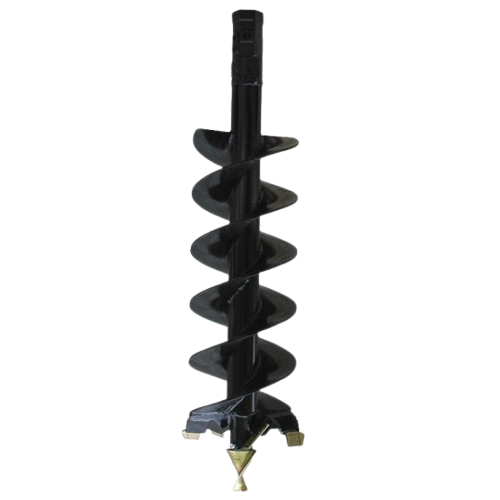
Every small fence outfit hits the same wall eventually. You’re tired of digging by hand, or renting a rig that costs half a day’s profit, and you finally decide it’s time to buy something that drills holes for you. Then the real question shows up. Excavator or skid steer?
I’ll tell you where I land, but it depends on your jobs. For a lot of crews, an auger for mini excavator work ends up being the smarter move, mostly because of reach, control, and the places you can actually get to. Skid steers aren’t bad, they’re great at plenty of things. Fence holes in tight, messy ground just isn’t always one of them.

Start With the Jobs You Actually Do
Forget the spec sheets for a second. Think about your last ten fence jobs. How many were open flat pastures and how many were backyards with a gate barely wide enough for your truck? Residential fencing is cramped, rocky, full of roots and buried stuff nobody told you about.
If you’re mostly running long ag fence lines across open ground, a skid steer auger makes a lot of sense. Drive, drill, drive, drill. Fast and simple. But if your work leans toward subdivisions, slopes, or property lines with stuff in the way, you’ll feel the limits of a skid steer pretty quick.
Why the Excavator Setup Wins on Tight Sites
A mini excavator can park in one spot and reach out. That’s the whole advantage. You’re not driving across somebody’s lawn leaving ruts, you’re not spinning tracks on a hillside, you just swing the boom and drop the bit where the hole goes. On slopes that’s a big deal, because a skid steer drilling downhill can get sketchy fast.
You also get way better control over angle and depth. The operator sees the bit, the boom, everything. Hitting a utility marker or a big rock, you feel it and can back off before something snaps. That’s worth money, honestly, because bent augers and stripped drives aren’t cheap.
Where the Skid Steer Still Makes Sense
I don’t want to bash skid steers, because they’re workhorses. If you already own one, a skid steer auger is the cheapest way to get started, no question. They’re quick on repetitive holes, they’ve got decent hydraulic flow for bigger bits, and you can switch to a bucket or forks in about a minute.
The downside is positioning. You’ve got to drive the machine to every single hole. Soft ground, wet ground, tight turns, all of that eats time and wrecks yards. And a skid steer isn’t gonna reach over a ditch or down a bank the way an excavator can.
Hydraulics, Bit Sizes, and Not Buying the Wrong Thing
This is where people get burned. Your machine’s hydraulic flow and pressure have to match the drive unit, plain and simple. Too little flow and the auger crawls through clay. Too much and you can cook seals. Check your specs before you click buy, don’t guess.

Bit size matters too. Standard fence posts usually need somewhere around 6 to 12 inch bits, but gate posts and heavy duty work might want more. Rocky soil needs a rock auger with carbide teeth, regular bits will just get chewed up. Spartan Equipment builds drives and bits meant for real fence work, not weekend hobby jobs, so you’re not replacing parts every other month.
Cost, Honestly
Here’s the thing about small crews, cash flow is everything. If you already have a skid steer, adding an auger is cheap. If you’ve got a mini excavator, same story, one attachment turns it into a hole machine. If you’ve got neither, you’re probably better off buying the mini excavator because it digs trenches, handles footings, and moves dirt in places a skid steer can’t touch.
One good mini excavator attachment can pay for itself in a few jobs when you stop paying a sub or burning hours with a hand auger. That’s not marketing talk, that’s just math most fence guys can do on a napkin.
Don’t Forget Transport and Setup Time
A mini excavator needs a trailer and some muscle to load it. Skid steers do too, but they’re a little easier to throw around a site. Think about how you actually move equipment now. If you’re a two man crew with one truck and a dump trailer, weight and hauling matter.
Setup is quick on both, honestly. Quick couplers make swapping a bit or an auger take minutes. Just keep a few extra pins and hoses in the truck, because something always goes sideways on a Friday afternoon.
So Which One Should You Pick?
Open land, long runs, already got a skid steer? Stick with the skid steer auger and keep it simple. Tight yards, slopes, finicky ground, or you want one machine that does more? Go with the excavator and a solid auger for mini excavator work. You’ll feel the difference by the second week.
Wrapping Up
There’s no perfect answer, just the right fit for the kind of fence work you take on. Most small crews I hear from end up wishing they’d gone excavator sooner, mostly for the reach and the control. Whatever you pick, buy gear that handles rocks and roots without complaining, and match it to your machine’s flow.
If you’re ready to pick up a mini excavator attachment for your fence crew, Spartan Equipment is running 25% OFF SITEWIDE with code DIESEL25 this October. Not a bad time to stop digging by hand.