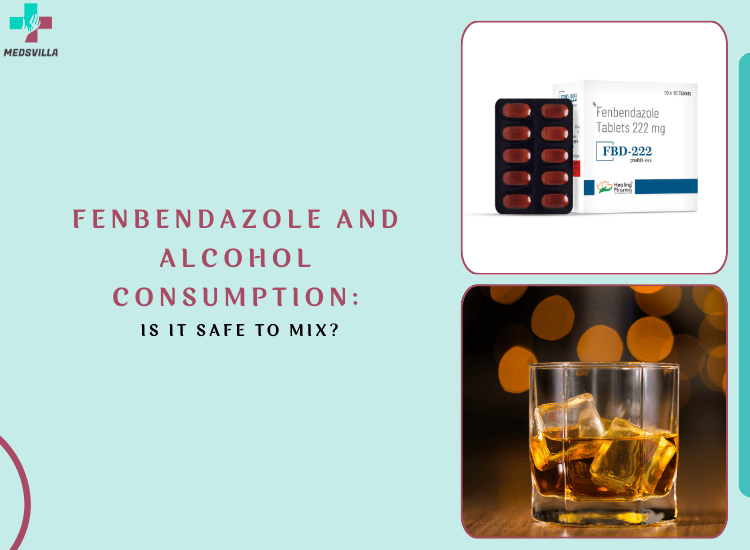
Fenbendazole is an antiparasitic medication approved for use in certain animals. It is commonly used by veterinarians to treat specific intestinal parasites and other worm infections. Although fenbendazole has attracted interest for human use online, it is important to understand that veterinary approval does not mean a medication is approved for people. The FDA lists fenbendazole products among approved animal drugs, while its guidance explains how to distinguish animal drugs from medicines approved for humans.
One common question is whether alcohol can be consumed while taking fenbendazole. There is limited reliable human evidence establishing the safety of combining fenbendazole and alcohol. Because fenbendazole is not an FDA-approved human medication, there is no well-established human interaction guideline that confirms drinking alcohol is safe with it.
What Is Fenbendazole?
Fenbendazole belongs to a class of antiparasitic medicines called benzimidazoles. Veterinary products containing fenbendazole are used for certain parasites in animals, including dogs, cats, horses, and other species depending on the specific product and labeling. FDA records list multiple approved fenbendazole animal products.
The medication works by interfering with processes that parasites need to survive. Its approved use, dosage, treatment duration, and safety information depend on the animal species and specific product.
People should not assume that a medication approved for animals is automatically appropriate for human treatment. The FDA recommends checking human drug approval through resources such as Drugs@FDA.
Can You Drink Alcohol With Fenbendazole?
There is not enough high-quality human evidence to say that combining alcohol with fenbendazole is safe.
This does not necessarily mean that a dangerous interaction has been proven. Instead, the problem is the lack of adequate human safety data. Alcohol can affect the gastrointestinal system, hydration, judgment, and liver function, while medications can also affect these areas.
If fenbendazole has been prescribed by a veterinarian for an animal, it is best to follow the veterinarian’s instructions and product labeling rather than relying on human medication advice.
For people considering fenbendazole for themselves, discussing the situation with a qualified healthcare professional is especially important.
Why Mixing Alcohol May Be a Concern
One concern is that both alcohol and medications can contribute to digestive discomfort. Fenbendazole products may cause gastrointestinal effects in animals, and alcohol can also irritate the stomach. Combining them could potentially make symptoms such as nausea, vomiting, abdominal discomfort, or diarrhea more noticeable.
Another consideration is the liver. The liver processes many substances, including alcohol and medications. This does not prove that alcohol and fenbendazole cause a specific liver interaction, but it is one reason to avoid assuming that the combination is harmless.
Alcohol may also make it harder to recognize whether a symptom is caused by the medication, the underlying illness, or drinking.
What About Fenbendazole and Ivermectin?
Online searches sometimes connect fenbendazole with ivermectin. People may encounter phrases such as fenbendazole ivermectin pills or fenbendazole ivermectin capsules when researching antiparasitic products.
However, combining two antiparasitic drugs should not be treated as automatically safe or effective. Ivermectin has approved human uses for certain medical conditions, but that does not mean that combining it with fenbendazole is appropriate.
The FDA specifically distinguishes medications approved for people from animal drugs. A product containing fenbendazole should not be assumed to be suitable for human treatment simply because it is sold online or marketed alongside human medications.
Be Careful With Online Product Claims
People searching for fenbendazole and ivermectin tablets price may find websites advertising combinations of these ingredients for human use.
Price and availability, however, do not establish whether a medication is approved, safe, or appropriate. The FDA explains that an NDC number or statements about an FDA-registered facility do not necessarily mean an animal product is FDA-approved for people.
Similarly, searches for ivermectin and fenbendazole pills for humans can produce products or claims that may not reflect established medical guidance.
Before purchasing or taking an unfamiliar medication, verify its approval status, active ingredients, manufacturer information, and intended use.
Possible Precautions
If fenbendazole is being used in an animal, consider these precautions:
- Follow the veterinarian’s recommended dose and treatment duration.
- Do not extend treatment without veterinary advice.
- Avoid giving additional medications unless the veterinarian approves them.
- Tell the veterinarian about other medicines or supplements being used.
- Monitor the animal for unusual or severe symptoms.
FDA has reported cases of bone marrow hypoplasia and pancytopenia in dogs associated with extra-label, longer-than-labeled use of fenbendazole. The agency notes that fenbendazole is considered safe and effective when used at the labeled dose, duration, and indications.
For humans considering fenbendazole, the safest approach is different: do not self-treat with veterinary fenbendazole. Ask a healthcare professional about an approved treatment appropriate for the actual condition.
When Should You Seek Medical Help?
Anyone who develops severe or unusual symptoms after taking a medication should seek medical advice promptly. Symptoms such as persistent vomiting, severe abdominal pain, difficulty breathing, fainting, confusion, yellowing of the skin or eyes, or significant weakness should not be ignored.
If alcohol has also been consumed, tell the healthcare professional approximately how much was consumed and when the medication was taken. Providing complete information can help clinicians evaluate possible causes and risks.
Fenbendazole and Alcohol: The Bottom Line
There is insufficient human evidence to establish that drinking alcohol with fenbendazole is safe. More importantly, fenbendazole is an FDA-approved animal drug rather than an FDA-approved human treatment.
For veterinary use, follow the animal product label and your veterinarian’s instructions. For human use, avoid self-medicating with veterinary fenbendazole or relying on online combinations such as fenbendazole ivermectin pills or fenbendazole ivermectin capsules.
If you are concerned about a possible interaction between alcohol and a medication, a healthcare professional or pharmacist can provide advice based on the exact product, dose, medical condition, and other medicines involved.





A Cajun seafood boil combines fresh shellfish with bold spices, buttery sauces, and hearty sides for a flavorful and shareable meal. Popular combinations include snow crab, king crab, shrimp, crawfish, lobster, mussels, corn, potatoes, and sausage.
https://redcrabseafood.com/locations/sterling-heights-mi/