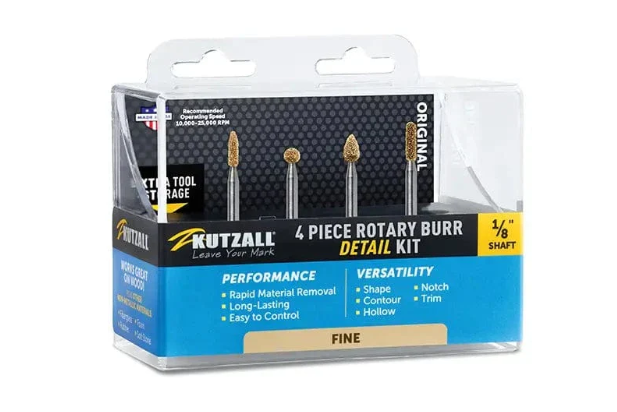
Whether you’re shaping wood, refining intricate details, or creating textured surfaces, selecting the right carving accessories plays a significant role in achieving professional-quality results. Among the most versatile accessories used in woodworking are burrs, which allow makers to remove material with precision while maintaining control over the carving process. From hobbyists to experienced artisans, these tools are valued for their ability to perform detailed shaping that traditional cutting tools often cannot accomplish.
When paired with compatible rotary equipment, burrs make it possible to carve curves, hollow out material, smooth contours, and add decorative textures with greater accuracy. Different shapes, sizes, and cutting patterns are designed for specific applications, allowing users to match the tool to the task for cleaner, more efficient results. Power carving has grown in popularity because it enables both rough shaping and fine detailing with the appropriate accessories and safe operating techniques.

What Are Burrs?
Burrs are rotary cutting attachments commonly used with die grinders, rotary tools, and flexible-shaft carving systems. They are designed to remove material quickly while giving the user excellent control over shaping and detailing.
Available in numerous profiles—including flame, ball, cylinder, taper, and wheel shapes—each style serves a unique purpose. Some are better suited for rapid stock removal, while others excel at refining intricate details or creating textured finishes.
Choosing the proper shape allows woodworkers to complete projects more efficiently while producing smoother, more consistent results.
Common Applications
These versatile carving accessories are widely used across many creative and professional projects, including:
- Wood carving
- Relief carving
- Sculptural artwork
- Bowl and spoon carving
- Sign making
- Furniture detailing
- Texture creation
- Artistic finishing
Many experienced woodworkers rely on multiple burr profiles throughout a single project, switching between coarse shaping and fine detailing as the work progresses.
Selecting the Right Burr
Not every carving task requires the same cutting profile. Several factors should be considered before selecting a burr.
Shape
Different shapes perform different functions:
- Flame burrs work well for general shaping.
- Ball burrs create rounded recesses.
- Cylinder burrs flatten surfaces.
- Tapered burrs reach narrow areas.
- Wheel profiles assist with edge work.
Coarseness
Coarser cutting surfaces remove material quickly, making them ideal for rough shaping. Finer cutting surfaces provide better control during finishing and detailed carving.
Selecting the appropriate combination often reduces sanding time while improving surface quality.
Benefits of Using Quality Burrs
Many woodworkers appreciate burrs because they provide flexibility across a wide range of carving applications.

Some of the primary advantages include:
- Precise material removal
- Better control over fine details
- Faster shaping compared to hand tools
- Consistent carving performance
- Ability to create unique textures
- Compatibility with various rotary carving systems
Experienced carvers frequently combine several burr shapes throughout a project to improve efficiency and produce more refined results. Community discussions also highlight that different profiles and cutting aggressiveness allow users to adapt to different wood species and carving styles.
Safety Tips for Power Carving
Because rotary carving tools operate at high speeds, proper safety practices are essential.
Always remember to:
- Wear eye protection or a face shield.
- Use appropriate respiratory protection when creating fine dust.
- Secure the workpiece before carving.
- Keep both hands in stable positions whenever possible.
- Follow manufacturer recommendations for operating speed.
- Inspect carving accessories before each use.
Proper safety habits help reduce the likelihood of accidents while improving carving accuracy.
Caring for Your Burrs
Proper maintenance extends the lifespan and performance of carving accessories.
Good maintenance practices include:
- Cleaning debris after each use.
- Avoiding excessive pressure during carving.
- Storing accessories separately to prevent damage.
- Using recommended operating speeds.
- Replacing worn or damaged burrs promptly.
Routine care helps maintain consistent cutting performance and improves overall project quality.
Why Burr Selection Matters
Every carving project presents different challenges. Softwoods, hardwoods, deep recesses, and intricate textures each require different cutting characteristics.
Using the correct burrs for each stage of carving improves efficiency, reduces unnecessary tool wear, and produces cleaner finishes with less effort. Matching the accessory to both the material and the intended result allows carvers to work with greater precision while preserving the integrity of the workpiece.
Conclusion
Choosing high-quality burrs is an important step toward achieving cleaner cuts, greater control, and more consistent carving results. Understanding the different shapes, cutting profiles, and maintenance practices helps woodworkers select the right accessory for every stage of a project, from rough stock removal to intricate finishing details. As woodworking techniques continue to evolve, investing time in learning how to use power carving tools effectively can improve both craftsmanship and overall project efficiency. With the proper techniques and attention to safety, carvers can confidently create detailed, professional-looking work across a wide variety of woodworking applications.