Has your dentist found decay or a crack? Your first question is probably a simple one. Will a filling fix it, or does the tooth need a crown?
Both treatments restore a damaged tooth. However, they suit very different situations. Knowing the difference makes the whole thing feel far less daunting.
At Bigger Smiles in Gymea, we care for patients from across Sydney. We also take a conservative, tooth-preserving approach. In short, we recommend the least invasive option that will properly protect your tooth. This guide explains when a filling is enough, when a tooth needs a crown, and how we reach that decision together. If you already know you need a crown, you can read the full detail on our dental crowns in Sydney page.
What Is the Difference Between a Filling and a Crown?
The picture is straightforward. A filling works inside the tooth. A crown works over it.
A filling replaces a small area of tooth lost to decay or minor damage. It sits within the healthy structure that remains and bonds to it. In other words, think of it as a patch.
A crown is different. It is a custom-made cap that covers the whole visible part of the tooth. As a result, it restores shape and strength from the outside. Think of it as a protective helmet. So the choice comes down to one question. How much healthy, natural tooth is left to work with?
When Is a Filling the Right Choice?
A filling is usually the answer when decay is small to moderate. It also needs plenty of sound tooth around it. For example, if we catch a cavity early at a routine check-up, a filling is almost always all it takes.
That single treatment repairs the tooth and stops the decay spreading. It also keeps the appointment short and simple.
At Bigger Smiles, we use tooth-coloured white fillings. They bond directly to the tooth and blend in naturally. As a result, a repaired tooth looks just like an untouched one.
A filling is also the more conservative choice. Above all, it preserves the most of your own tooth. That is the better long-term outcome whenever the situation allows it.
When Does a Tooth Need a Crown Instead?
A crown becomes the better choice once a tooth loses too much structure for a filling to hold. Take a tooth that already carries a large old filling. Adding an even bigger one would leave the walls thin and prone to fracture. Instead, a crown wraps and reinforces the whole tooth.
Crowns also suit a tooth that is cracked or heavily worn from grinding. Here, the coverage holds the tooth together and stops the crack spreading. A cracked tooth that flexes under chewing often needs more than a filling.
A crown is standard care after root canal therapy on back teeth too. The Australian Dental Association recommends this, because a root-treated tooth turns brittle and needs protection from fracture. Finally, a crown can restore a badly discoloured or misshapen tooth, or anchor a dental bridge where a tooth is missing.
What Types of Dental Crowns Are Available?
Once a crown is the plan, the next choice is the material. At Bigger Smiles, we match the crown to the tooth, your bite, and how the tooth looks when you smile.
Porcelain crowns are the popular choice for front teeth. They reflect light like natural enamel, and we colour-match them to your other teeth. As a result, they are very hard to tell apart from a real tooth.
Zirconia crowns are stronger again. Therefore, we often choose them for back teeth, where chewing forces run highest. They resist chipping well and tend to last many years.
We also offer same-day CEREC ceramic crowns. In this case, we design and mill your crown in the clinic during a single visit. You can read more about each option on our dental crowns in Sydney page.
What If It Could Be Either?
Some teeth sit in a grey zone, where either treatment might work. This is where clinical judgement matters most.
We look at how much sound tooth remains once we remove the decay. We also weigh where the tooth sits and how much bite force it handles. For example, a back molar doing heavy chewing has different needs from a tooth under lighter load.
Accurate diagnosis counts here too. We use in-house CBCT 3D imaging to check the tooth’s structure and root health before we decide. Occasionally, the true extent of the damage only shows once we begin. If that happens, we talk it through with you rather than pressing ahead.
How Long Do Fillings and Crowns Last?
Both restorations last for years when you look after them. In general, a well-placed filling holds up well and does its job quietly for a long time. A crown tends to last longer still, because it protects the whole tooth from the outside.
Longevity depends on a few simple things, though. First, good daily brushing and flossing keep decay away from the edges. Second, regular check-ups let us spot any wear early.
Grinding is worth mentioning as well. If you clench or grind at night, a custom night guard protects both fillings and crowns from excess force. In short, the care you give at home has a real effect on how long each one lasts.
Why Does Catching It Early Matter?
Waiting has a real cost, and not only a financial one. We can usually repair a small cavity with a straightforward filling. Left too long, though, that same decay spreads deeper and weakens the tooth.
As a result, the fix can move from a simple filling towards a crown, a root canal, or even the loss of the tooth. In other words, a small problem quietly becomes a bigger one.
This is the strongest reason to keep up regular check-ups and cleans. Problems caught at the filling stage stay small and simple. By contrast, the longer a tooth goes unchecked, the more involved the eventual repair becomes.
What Do the Filling and Crown Procedures Involve?
A filling is quick and gentle. First, we numb the tooth so you stay comfortable. Then we remove the decay, clean the area, and bond the tooth-coloured filling in place. Most fillings take a single, short visit.
A crown involves a little more. Traditionally, it takes two visits, because a laboratory makes the crown between appointments.
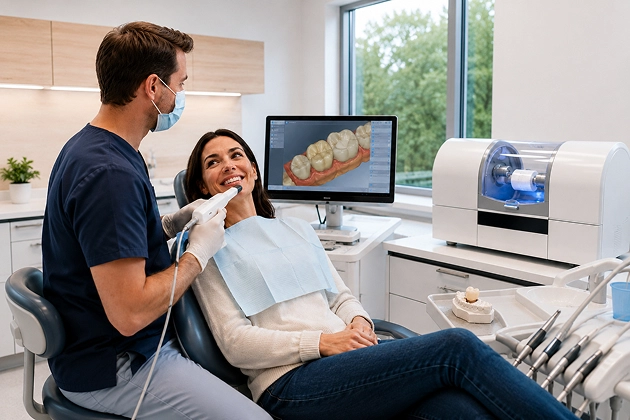
Our same-day CEREC option changes that, though. We scan the tooth, design the crown, mill it in the clinic, and bond it in one visit. So there is no temporary crown and no second appointment. For many patients across Sydney, that convenience makes the whole thing far easier to plan around work and family.
How Bigger Smiles Decides, and What Makes a Crown Easier
Our approach is simple. We recommend the most conservative treatment that will properly protect your tooth. We back that with precise 3D diagnosis, and we explain the reasons clearly so you always understand the plan.
Where a crown is the right call, our same-day CEREC technology makes it easier. As mentioned, we complete the crown in a single visit, so it fits neatly into a busy week.
You also receive an itemised, ADA-coded quote upfront. On top of that, we keep you comfortable throughout, with ultra-fine needles and gentle pain-reduction techniques. We treat patients from Gymea and across Sydney. If you would like us to assess your tooth, or you already know you need a crown, learn more on our dental crowns in Sydney page. You can also contact us or call (02) 8502 3141.
Frequently Asked Questions
Is a crown better than a filling?
Neither is better overall. A filling suits small decay and preserves more natural tooth, while a crown protects a tooth that has lost too much structure. The right choice depends on how much healthy tooth remains.
Can I get a crown after a filling?
Yes. If a filling fails or the tooth weakens over time, a crown is often the next step. We assess the tooth first and recommend the most conservative option that will protect it.
How do I know if I need a crown or a filling?
Your dentist decides based on how much sound tooth remains after removing the decay. Small cavities usually need a filling. Larger damage, cracks, or a tooth after root canal treatment usually need a crown.
Does getting a crown hurt?
No. We numb the tooth with local anaesthetic first, so you feel pressure but not pain. Mild sensitivity for a day or two afterwards is normal, and it settles quickly.
Can you get a crown in one visit in Sydney?
Yes. At our Gymea clinic, our same-day CEREC service designs, mills and fits a ceramic crown in one appointment. There is no temporary crown and no second visit.