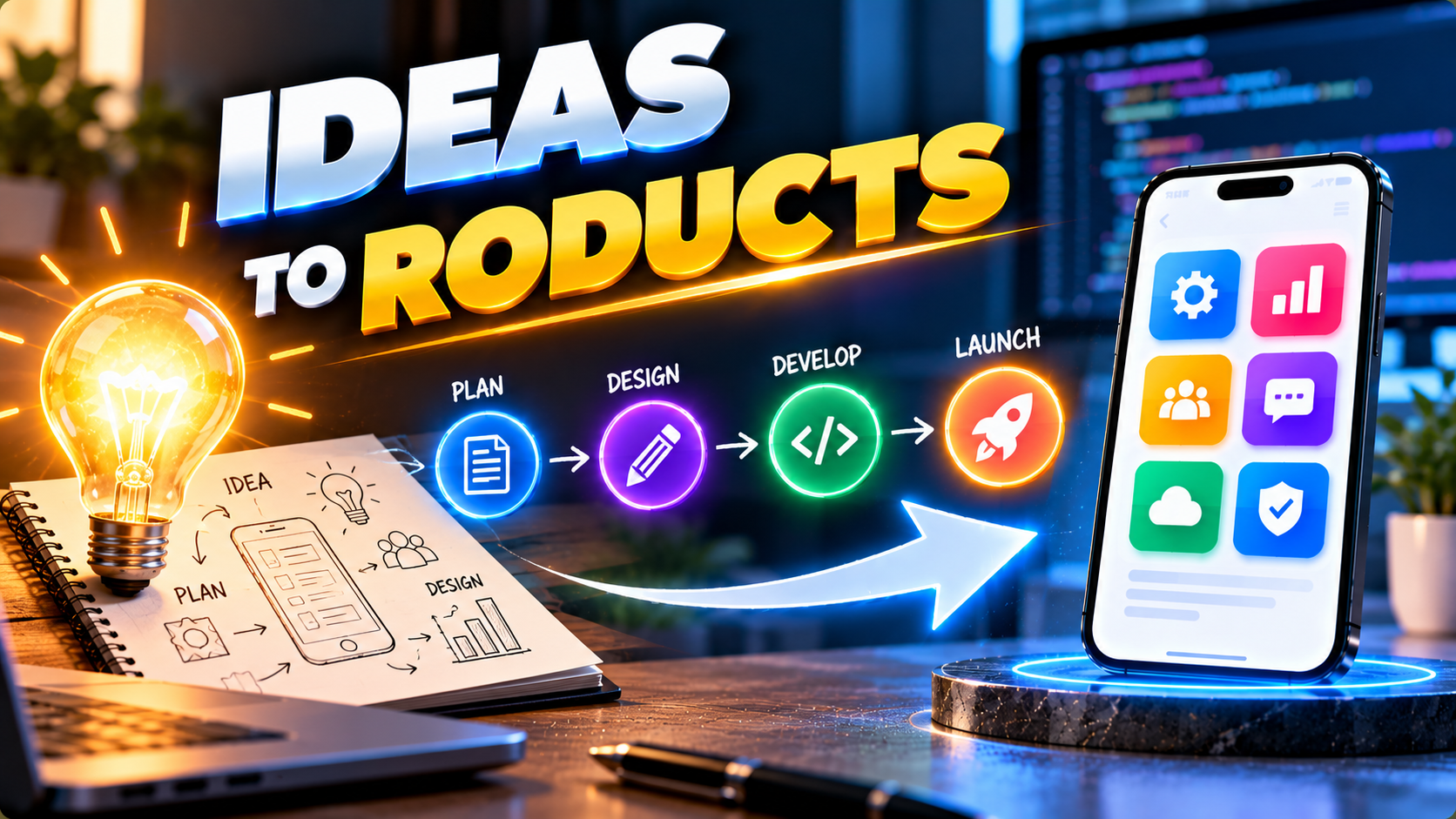

Every successful mobile application begins with an idea, but turning that idea into a working product requires much more than writing code. Businesses must validate the concept, understand their users, define the right features, select suitable technologies, and prepare for the challenges that emerge during development.
A professional mobile app development company connects these stages into a structured process. It helps businesses move from an initial concept to a usable application while balancing technical feasibility, customer needs, budget, and long-term business goals.
How Does an App Idea Become a Viable Business Concept?
Before development begins, the idea needs to be examined from a business perspective. A feature that sounds useful during a brainstorming session may not address a problem customers are willing to solve through a mobile app.
The discovery stage helps establish who the intended users are, what challenges they face, and how the proposed application could improve their experience. Teams may review competitor products, interview potential customers, and examine existing business workflows to identify opportunities.
For example, a business considering a home-service booking app might initially want dozens of features. Early research could reveal that customers primarily need reliable availability, transparent pricing, and clear booking confirmations.
That insight helps narrow the initial scope and prevents unnecessary development work.
A strong app concept begins with a defined customer problem, not simply a list of features.
Why Is Product Planning Important Before Development?
Once the idea has a clear purpose, the development team translates it into requirements that can guide design and engineering.
This includes defining user roles, essential workflows, integrations, data requirements, and the expected behaviour of important features. The team should also identify technical dependencies that could affect the budget or delivery schedule.
A useful planning document answers practical questions:
- Who will use the application, and what will they need to accomplish?
- Which features are essential for the first release?
- Does the app need a backend, an administrative dashboard, or third-party integrations?
- What security, performance, and accessibility requirements apply?
- How will the business measure whether the product is successful?
Planning also establishes boundaries. New ideas may emerge during development, but a documented change process helps the business understand their impact before approving additional work.
How Does UI/UX Design Turn Requirements Into an Experience?
An application must be easy to understand before users can benefit from its functionality. UI/UX design helps determine how information is presented, how screens connect, and how users complete important tasks.
The process often begins with user flows and wireframes. These show the structure of the application before the team invests heavily in visual details. Designers can then create interactive prototypes that allow stakeholders to review navigation and functionality before development begins.
Consider a food ordering app. The design should make it easy to browse restaurants, select items, review the order, pay, and track delivery. If customers repeatedly struggle to find the checkout button, the problem may be with the user journey rather than the underlying code.
Usability testing can identify these issues early, when changes to the design are generally easier to manage than changes to a completed application.
Which Technologies Does a Mobile App Development Company Choose?
Technology selection depends on the application’s requirements, expected usage, available budget, and maintenance needs. A development company should explain the advantages and limitations of its recommendations rather than selecting tools simply because they are popular.
For mobile interfaces, teams may use native technologies such as Swift for iOS and Kotlin for Android, or cross-platform frameworks such as Flutter and React Native.
Native development can suit products that require specialised platform capabilities. Cross-platform development can reduce duplicated work when building for multiple operating systems, although some platform-specific implementation and testing may still be necessary.
The backend may use technologies such as Node.js, Laravel, Python frameworks, or Java-based systems. Databases, APIs, cloud infrastructure, and external services are selected according to the product’s data and operational requirements.
The goal is to create a technology stack that supports the application’s current needs without making future updates unnecessarily difficult.
How Is the First Working Version Developed?
After planning and design approval, developers begin implementing the application. Depending on the project, this may involve building mobile screens, backend services, database structures, authentication, APIs, and administrative functionality.
Many teams use an iterative development approach. Features are divided into manageable tasks, implemented in stages, and reviewed as working software becomes available.
This allows stakeholders to see progress and provide feedback before every feature has been completed. It also gives the team opportunities to identify technical problems earlier.
For example, an ecommerce project may start with product browsing and account management, followed by cart functionality, payment integration, and order tracking. The exact sequence depends on dependencies and project priorities.

Regular demonstrations help keep expectations aligned. They also make it easier to distinguish genuine scope changes from misunderstandings about the original requirements.
Why Are Testing and Quality Assurance Essential?
An application can appear complete while still containing defects that affect customers. Testing helps establish whether the software behaves as expected across supported devices, operating systems, network conditions, and user scenarios.
A mobile app development company may use several testing methods:
- Functional testing: Checks whether features meet their requirements.
- Integration testing: Verifies that the app communicates correctly with APIs and external services.
- Regression testing: Checks that new changes have not broken existing functionality.
- Performance testing: Examines response times, resource usage, and behaviour under load.
- Security testing: Identifies weaknesses in authentication, permissions, data handling, and other security controls.
Testing should cover important real-world situations, including failed payments, interrupted connections, incorrect inputs, and expired sessions.
Not every defect can be found before launch, but a defined testing process reduces avoidable failures and gives the business greater confidence in the release.
What Happens Before an App Is Launched?
Preparing an application for release involves more than submitting it to an app store. The team needs to verify the production configuration, review permissions, check privacy information, and ensure that the necessary services are ready.
Depending on the project, launch preparation may also include:
- Configuring production databases and backend services.
- Setting up monitoring, logging, and backups.
- Preparing store listings, screenshots, and required metadata.
- Confirming account access and deployment responsibilities.
- Testing the release build and important user journeys.
Businesses should agree on who manages app store accounts, signing credentials, production infrastructure, and final release approval.
A staged rollout may be appropriate when the platform and product allow it. Releasing to a limited audience can help the team monitor real-world behaviour before making the application broadly available.
How Can a Mobile App Development Company Improve the Product After Launch?
The first release provides an opportunity to learn how the application performs with real users. Their behaviour may differ from initial assumptions, and new technical issues may appear as the app encounters different devices, usage patterns, or external services.
After launch, the team can review crash reports, performance metrics, customer feedback, and usage data to identify areas for improvement.
For example, if customers frequently abandon a registration form, the business can investigate whether it requests unnecessary information or contains confusing steps. If a screen becomes slow under heavier usage, developers can examine API performance, database queries, and resource consumption.
Maintenance also includes security updates, dependency upgrades, operating system compatibility, and changes to external integrations.
A product roadmap helps prioritise improvements according to customer value, business impact, risk, and available budget rather than adding features without a clear reason.
How Can Businesses Keep App Development on Track?
Successful product delivery requires collaboration between business stakeholders and the development team. Clear decisions, timely feedback, and documented requirements reduce the likelihood of misunderstandings that delay delivery.
Before work begins, businesses should agree on the scope, milestones, payment terms, testing responsibilities, and process for approving changes. They should also establish ownership of source code, designs, documentation, and other project assets.
Regular progress reviews help identify risks while there is still time to address them. A reliable development partner should communicate delays or technical constraints openly and explain the available options.
The result is a more predictable process in which decisions are based on evidence, requirements, and business priorities.
Conclusion
A mobile app development company turns ideas into products by connecting business discovery, product planning, UI/UX design, engineering, testing, launch preparation, and ongoing improvement. Each stage contributes to building an application that solves a real problem and remains practical to maintain as the business grows.
The strongest results come from clear objectives, informed technical decisions, regular feedback, and realistic expectations. Businesses exploring AI-powered software development solutions should follow the same disciplined approach, ensuring that innovative features support genuine needs and fit into a dependable product architecture.
FAQs
1. How long does it take to turn an app idea into a working product?
The timeline depends on the app’s complexity, number of features, integrations, design requirements, and testing needs. A focused MVP may take considerably less time than a complex application with multiple user roles and extensive backend functionality.
2. What does a mobile app development company do during the discovery phase?
The company examines the business objectives, target users, essential features, technical requirements, and potential risks. This information helps define the scope and establish a practical plan for design and development.
3. Should a business build an MVP before developing a complete app?
An MVP can be useful when a business needs to validate its concept or learn which features customers value most. It focuses the initial release on essential functionality while preserving the ability to expand the product later.
4. Who owns the source code after mobile app development?
Ownership depends on the contract and applicable intellectual property terms. Businesses should clearly establish ownership or licensing rights for the source code, design assets, documentation, and other deliverables before the project begins.
5. Does app development end after the product is launched?
No. Applications generally need maintenance, security updates, compatibility improvements, monitoring, and new features over time. Post-launch feedback also helps businesses identify opportunities to improve the customer experience and product performance.