timeandgold
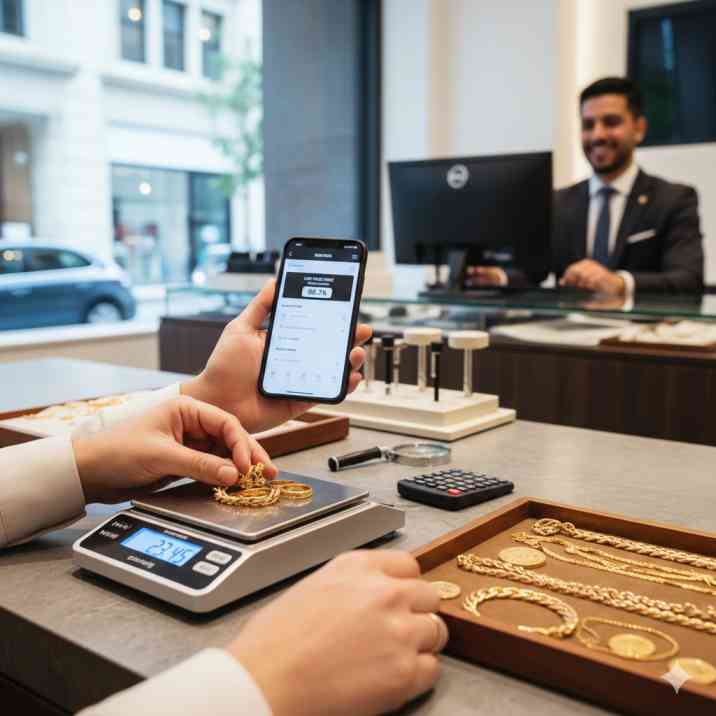
Picture this. You walk into a shop to meet a gold buyer in Sydney with your old family ring. The buyer offers you $800. However, later you discover it was worth over $1,100. Unfortunately, this happens more often than people think.
Gold prices in Australia have been strong in recent years. Because of this, many people in Sydney are now selling old jewellery, broken chains, and unused gold coins. However, if you do not calculate your gold value first, you could lose hundreds of dollars.

Therefore, before visiting any gold buyer, you should understand how to calculate your gold’s real value at home. Fortunately, the process is simple if you follow the right steps.
Let’s go step by step.
Step 1: Know Your Gold’s Purity (Karats)
First of all, you must understand gold purity. Gold purity is measured in karats (K). The higher the karat, the more pure the gold.
For example:
-
24K = 99.9% pure gold
-
22K = 91.6% gold
-
18K = 75% gold
-
14K = 58.3% gold
-
9K = 37.5% gold
Most jewellery in Sydney is 18K or 14K. However, older Australian pieces are sometimes 9K.
How to Check Purity
Before doing any math, check your jewellery carefully. Usually, you will see small numbers stamped inside rings or on clasps. These are called hallmarks.
For instance:
-
“750” means 18K
-
“585” means 14K
-
“375” means 9K
In addition, you can use a magnet test at home. Pure gold does not stick to a magnet. However, if it sticks strongly, it may contain other metals.
If you want more accuracy, you can use a home acid testing kit. Although this costs extra, it helps avoid disputes later when dealing with a gold buyer in Sydney.
Step 2: Check the Current Gold Spot Price in Australia
After you know the purity, the next step is checking the spot price. The spot price is the current market price of gold per gram.
Gold prices change daily. In fact, they can move several times in one day. Because of this, always check the price on the same day you plan to sell.
In Australia, gold is priced in AUD per gram. However, many international websites show prices in USD per ounce. Therefore, make sure you are looking at the correct currency.
You can check live prices from:
-
Kitco
-
ABC Bullion
-
The Perth Mint
-
Australian financial news websites
Most importantly, always look at the price per gram, not per ounce. This makes your calculation much easier.
Step 3: Weigh Your Gold Correctly
Now that you know the purity and price, you must weigh your gold.
Many people make mistakes here. As a result, they receive less money.
What You Need
-
A digital scale (0.1 gram accuracy)
-
A small bowl or container
First, clean your gold to remove dirt. Next, place the empty container on the scale and press the tare button. Then, add your gold.
Always weigh in grams. Do not use kitchen scales if they are not accurate.
For example, if your necklace weighs 22 grams, write that number down.
However, be careful not to remove parts like clasps. Some sellers remove clasps and lose value. Instead, weigh the entire piece unless you know certain parts are not gold.
Step 4: Use the Melt Value Formula
Now comes the most important step — calculation.
The basic formula is:
Weight (grams) × Purity (%) × Spot Price (per gram)
Let’s look at an example.
Imagine you have:
-
20 grams
-
14K gold (58.3% purity)
-
Spot price = $105 per gram
Now calculate:
20 × 0.583 × 105 = $1,224.30
Therefore, the melt value is about $1,224.
This is the base value of your gold.
However, remember this is not always the final amount you will receive.
Step 5: Understand Buyer Margins and Premiums
Gold buyers need to make a profit. Because of this, they usually pay slightly less than the melt value.
In Sydney, most gold buyers pay between 90% and 98% of melt value. However, some pay much less.
For example:

If your melt value is $1,224:
-
95% payout = $1,163
-
90% payout = $1,101
As you can see, the difference can be over $60.
Therefore, always ask what percentage of melt value they pay.
In addition, ask if there are any refining fees. Some buyers deduct extra charges. Meanwhile, others include all costs in their quote.
Because premiums vary by suburb, CBD gold buyers often pay more than smaller suburban shops.
Step 6: Compare Multiple Gold Buyers in Sydney
Never accept the first offer immediately.
Instead, visit at least three different gold buyers in Sydney. For example, you might compare:
-
Independent local gold dealers
-
Pawn shops
-
Jewellery stores that buy gold
-
National chains
Each buyer may offer a different price.
Furthermore, when buyers know you understand your gold’s value, they are more likely to offer fair prices.
Knowledge gives you confidence. Confidence gives you power.
Common Mistakes to Avoid
Although selling gold seems simple, many people lose money because of small mistakes.
Here are common errors:
-
Not checking purity
-
Not checking same-day spot price
-
Using inaccurate scales
-
Accepting first offer
-
Ignoring payout percentage
Because of these mistakes, some Sydney sellers lose hundreds of dollars.
However, you now know how to avoid them.
Extra Tip: Gold Coins and Bullion
Gold coins and bars are slightly different from jewellery.
In fact, bullion products often sell closer to spot price. Some even sell at a small premium above melt value.
However, condition and brand matter.
For example, coins from The Perth Mint may sell differently than generic bars.
Therefore, research your specific item before selling.
Final Checklist Before Visiting a Gold Buyer in Sydney
Before you leave home, make sure you:
-
Check purity
-
Check live gold price in AUD
-
Weigh your gold accurately
-
Calculate melt value
-
Know expected payout range
-
Compare multiple buyers
If you follow these steps carefully, you will walk into any gold buyer in Sydney fully prepared.
Conclusion
Selling gold does not have to be stressful. However, walking in unprepared can cost you money.
Fortunately, calculating gold value at home is simple. First, check purity. Next, track the spot price. Then, weigh your gold correctly. After that, apply the formula. Finally, compare buyer offers.
As a result, you protect yourself from low offers.
Gold prices remain strong in Australia. Therefore, 2026 could be a smart time to sell. But only if you sell smart.
When you understand the numbers, you control the deal.
And that makes all the difference.
1. How do I calculate my gold value before visiting a gold buyer in Sydney?
First, check your gold’s purity (karats). Next, weigh your gold in grams using a digital scale. Then, find the current gold spot price in AUD per gram. Finally, use this formula:
Weight × Purity % × Spot Price = Melt Value
This gives you an estimated base value before any buyer deductions.
2. What percentage do gold buyers in Sydney usually pay?
Most gold buyers in Sydney pay between 90% and 98% of the melt value. However, the percentage can vary depending on the buyer, the item type, and current market demand. Therefore, it is always smart to compare at least three offers before selling.
3. How can I check the purity of my gold at home?
You can check for a hallmark stamp such as 375 (9K), 585 (14K), or 750 (18K). In addition, you can use a magnet test because real gold does not stick to magnets. For better accuracy, you may use a home gold testing kit before visiting a gold buyer in Sydney.
4. Does the gold spot price change daily in Australia?
Yes, the gold spot price changes every day and sometimes multiple times a day. Because of this, you should always check the live gold price in AUD on the same day you plan to sell your gold.
5. Is it better to sell gold jewellery or gold coins?
Gold jewellery is usually sold for its melt value. However, gold coins and bullion may receive a slightly higher payout, especially if they are in good condition. Therefore, if you own coins or bars, research their market demand before selling to a gold buyer in Sydney.

 Author