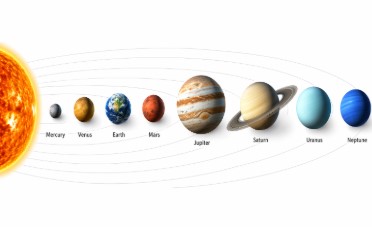
Children are naturally curious about space, stars, and planets, making astronomy an excellent topic for early education. In modern education systems, traditional rote learning is being replaced with more engaging methods that encourage curiosity and participation. One of the most effective approaches is interactive learning, especially when teaching complex topics like the solar system for kids. When children actively engage with concepts instead of passively reading them, their understanding becomes deeper and more lasting. Teaching astronomy through hands-on activities allows children to visualize abstract concepts such as planetary orbits, gravity, and the scale of the universe. Research in science education shows that abstract topics like space are best understood when supported with visual and participatory tools rather than text-heavy explanations alone.
Why Interactive Learning Matters for Space Education
The solar system is difficult for young learners because it involves vast distances, invisible forces, and complex spatial relationships. Instead of memorizing facts, children benefit more when they can see, touch, and simulate these ideas. This is where interactive learning becomes essential. Interactive approaches transform passive lessons into active exploration. Studies show that students retain scientific concepts better when they participate in activities such as modeling, simulation, and guided experimentation. For example, instead of simply reading about planets, children can build models or use digital tools to explore how planets move around the Sun.
Hands-On Activities for Understanding the Solar System
One of the most effective ways to teach astronomy is through physical models. Building a solar system using everyday materials helps children understand planetary order, size differences, and orbital positioning. Craft-based learning is widely used in classrooms because it connects imagination with real-world understanding.
In solar system for kids education, activities such as painting planets, arranging them in correct order, or using string to represent orbits can significantly improve comprehension. This method also encourages teamwork, creativity, and problem-solving skills. Another useful technique is using storytelling combined with models. Teachers can guide children through a “journey through space,” where each planet has unique characteristics. This narrative approach makes learning more memorable and emotionally engaging.
Technology-Based Interactive Learning Tools
Modern education increasingly uses technology to make space learning more engaging. Digital simulations, augmented reality apps, and virtual space tours allow children to explore the universe in a realistic and immersive way. These tools help visualize planetary motion, moon phases, and solar eclipses. Interactive applications designed for space education often include mini-games, quizzes, and guided explorations. These features turn learning into an experience rather than a lecture. As a result, students develop a stronger interest in astronomy and science in general. The use of such tools aligns with the concept of interactive learning, which emphasizes engagement, experimentation, and real-time feedback. This method helps children grasp complex ideas more easily compared to traditional textbook-based learning.
Classroom and Outdoor Learning Integration
Combining indoor and outdoor learning is another effective strategy. Teachers can use classroom models alongside stargazing activities. Observing the night sky helps children connect theoretical knowledge with real-world observation. Outdoor learning sessions, such as identifying stars or tracking planetary positions, make astronomy feel more tangible. When children see what they have learned in books reflected in the sky, their curiosity naturally increases. Group activities also play an important role. Students working together on space projects learn collaboration and communication while reinforcing scientific understanding.
Benefits of Interactive Learning in Astronomy Education
Interactive methods offer several educational benefits. First, they improve memory retention because students actively participate in the learning process. Second, they enhance critical thinking by encouraging children to ask questions and explore answers independently. Third, they make learning enjoyable, which increases long-term interest in science. For topics like the solar system, where concepts are abstract and large in scale, interactive methods bridge the gap between imagination and reality. This approach ensures that learning is not only informative but also engaging and meaningful.
Conclusion
In conclusion, teaching astronomy becomes far more effective when educators use engaging and hands-on methods. The use of interactive learning helps simplify complex space concepts and makes them accessible to young minds.