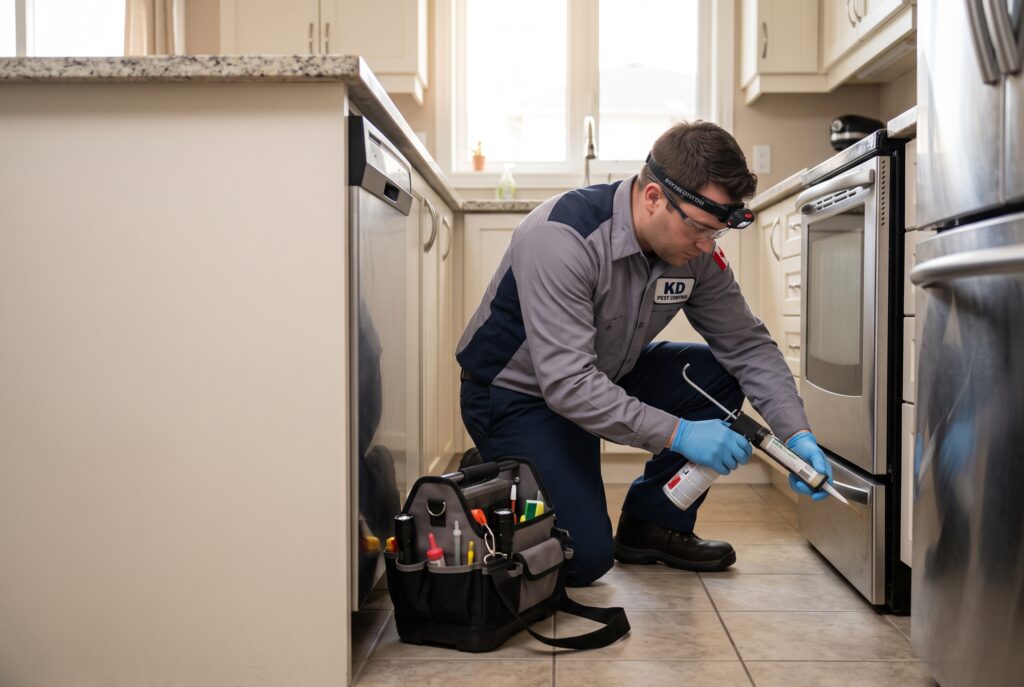
Returning home too soon after a pest treatment can create unnecessary exposure, while staying away longer than required can disrupt your day for no benefit. The correct waiting period depends on the pesticide, application method, treated area, and directions provided for that specific treatment. Pest treatment re-entry time should therefore be based on the product label and your pest control professional’s instructions rather than a universal number of hours.
Health Canada explains that pesticide labels may specify a waiting period before people can safely return to a treated site. Directions can range from waiting until residues have dried to remaining outside for a stated number of hours.

How Long Should You Stay Out?
There is no single waiting period that applies to every pest treatment in a Hamilton home. The pesticide label is the main authority because different products and application methods can have different re-entry requirements.
For example, Health Canada gives examples of label instructions that require occupants to wait until residues are dry, remain outside for two hours, or ventilate a closed room before returning.
That means a neighbour’s treatment schedule may not apply to your home, even if both properties were treated for similar pests. The products, concentrations, application locations, and treatment methods may differ.
Before leaving the property, confirm three details with the applicator:
- Which rooms or areas were treated?
- When can people and pets safely return?
- Is ventilation or another post-treatment step required?
If the applicator gives you written re-entry instructions, keep them available until the waiting period has ended.
Why Re-Entry Times Can Differ
The pest treatment re-entry time reflects how a registered pesticide is intended to be used safely. It is not simply a standard waiting period chosen by the pest control company.
The Product Label Matters
Health Canada states that the most up-to-date pesticide label should be followed. Re-entry requirements are intended to reduce exposure after an application, and the label may contain specific instructions for returning to the treated area.
This distinction matters because one product may permit entry after the spray has dried, while another may specify a fixed waiting period.
Application Method Matters
A targeted crack-and-crevice application is different from a treatment that affects a broader indoor area. Dusts, liquid sprays, aerosols, and other formulations can also have different precautions.
Health Canada’s guidance for structural pest control products states that people and pets should not enter treated areas until liquid or aerosol sprays have dried. For dust products, entry may be restricted until the dust has settled.
As a result, you should not estimate your return time solely from the pest being treated.
Drying and Ventilation After Treatment
Two practical factors often affect safe return after indoor pest control: whether the treated material has dried and whether the space has been adequately ventilated.
Health Canada advises keeping children away from treated areas during pesticide application and until the area is dry. It also advises ventilating the home before returning after indoor pesticide use.
Ventilation can involve opening doors and windows or using appropriate air circulation where the product directions permit it. Health Canada’s structural pest control guidance also includes post-application ventilation for relevant treatments.
However, ventilation should not be used as a reason to shorten a stated re-entry interval. If the label or applicator says to remain outside for a specific period, wait for that period to finish.
What If Surfaces Still Look Wet?
Do not treat a suggested return time as permission to touch visibly wet treated surfaces. If the applicable instructions require the spray to dry before re-entry, wait until that condition has been met.
If you are uncertain, contact the applicator rather than guessing. Ask about the specific pesticide used and the instructions that apply to your property.
Children and Pets Need Attention
Children and pets may spend more time close to floors, baseboards, carpets, and other areas where pest treatments can be applied. They may also touch, lick, or investigate surfaces that adults would normally avoid.

Health Canada specifically recommends keeping children out of treated areas while pesticides are being applied and until the areas are dry. Its pet guidance similarly advises keeping pets away and following the recommended return time.
Before allowing children or pets back into a treated room, confirm that the required waiting period has passed and any drying or ventilation instructions have been completed.
Also leave pesticide bait stations where the applicator placed them unless you are told otherwise. Health Canada notes that pesticide baits should be positioned where pets cannot reach them.
What to Do Before You Return
A simple return routine can prevent confusion, especially when several people live in the home.
First, check the return time supplied by the applicator. Do not rely on memory if you were given written instructions.
Next, confirm whether the treatment has any additional condition, such as waiting for sprayed surfaces to dry or ventilating the treated space. Follow the longest applicable requirement rather than choosing the earliest possible return.
Once re-entry is permitted, follow any post-treatment directions about food-contact surfaces, cleaning, or ventilation. Health Canada advises washing surfaces that normally come into direct contact with food after an indoor pesticide has dried.
Avoid immediately scrubbing every treated baseboard, crack, or crevice unless instructed to do so. Unnecessary cleaning could interfere with a residual treatment. Instead, follow the aftercare directions for the particular application.
Key Takeaways
- There is no universal waiting period for every indoor pest treatment.
- Follow the pesticide label and the applicator’s specific re-entry instructions.
- Drying time, ventilation, product type, and application method can affect when a treated area is ready for re-entry.
- Keep children and pets away until the applicable restrictions have ended.
- If instructions are unclear or conditions appear different from what you were told, contact the applicator before returning.
Return Home With Clear Instructions
The safest answer is not a generic number of hours. Your return should be based on the pesticide used, its label, the application method, and the instructions provided for your treatment. Following those directions also avoids staying away unnecessarily when the required pest treatment re-entry time has already passed.
If you are arranging treatment for a Hamilton property, contact KD Pest Control to discuss the treatment plan and ask for clear preparation and re-entry instructions before the application.
FAQs About Pest Treatment Re-Entry
1. Can I return as soon as the pesticide dries?
Sometimes, but only when the product directions allow it. Some pesticide labels permit re-entry once treated surfaces are dry, while others specify a fixed waiting period or additional ventilation. Follow the instructions for the actual product and application rather than using dryness as a universal rule.
2. Why do pest treatments have different wait times?
Products can differ in formulation, application method, treated location, and label requirements. Those differences can change the precautions needed after treatment. Therefore, a waiting period that applied to a previous service should not automatically be reused for a new pesticide treatment.
3. Should I ventilate my home before returning?
Ventilation may be required or recommended after an indoor pesticide treatment. Health Canada advises ventilating homes before returning after indoor pesticide use. Follow the product and applicator instructions because opening windows or circulating air does not replace a specific waiting period when one applies.
4. When can children enter treated rooms?
Children should remain outside treated areas until the applicable re-entry requirements have been met. Health Canada advises keeping children away during pesticide application and until treated areas are dry. If the label specifies a longer interval, that longer requirement should be followed.
5. When can pets return after pest control?
Pets should return only after the applicable waiting, drying, and ventilation requirements have been completed. Because pets may investigate floors, baseboards, or bait placements, also make sure they cannot access pesticide products or bait stations intended to remain out of their reach.
6. What if the treated surface is still wet?
If the treatment instructions require surfaces to dry before re-entry, continue to keep people and pets away. Do not assume that an estimated time overrides a visible condition required by the label. Contact the applicator if drying takes unexpectedly long or instructions are unclear.
7. Can I clean immediately after pest treatment?
Not necessarily. Food-contact surfaces may need cleaning according to the product directions, but scrubbing treated cracks, baseboards, or other target areas could interfere with some residual applications. Follow the post-treatment cleaning instructions supplied for the specific pesticide and treatment method.
8. Does every room need the same wait time?
Not always. The relevant restriction depends on which areas were treated and the instructions associated with the application. If only part of a property was treated, ask the applicator whether untreated spaces can be occupied or whether the entire home must remain vacant.
9. What if I return too early?
Leave the treated area if you discover that the required re-entry period has not finished, then follow the product and applicator instructions. If you experience concerning symptoms or believe pesticide exposure occurred, seek appropriate medical or poison-control advice rather than waiting for symptoms to resolve.
10. Where can I check pesticide safety directions?
The pesticide label is the key source for product-specific directions. Health Canada also publishes pesticide safety information and explains re-entry requirements. For a professional application, ask the applicator which registered product was used and which re-entry instructions apply to your home.