Author
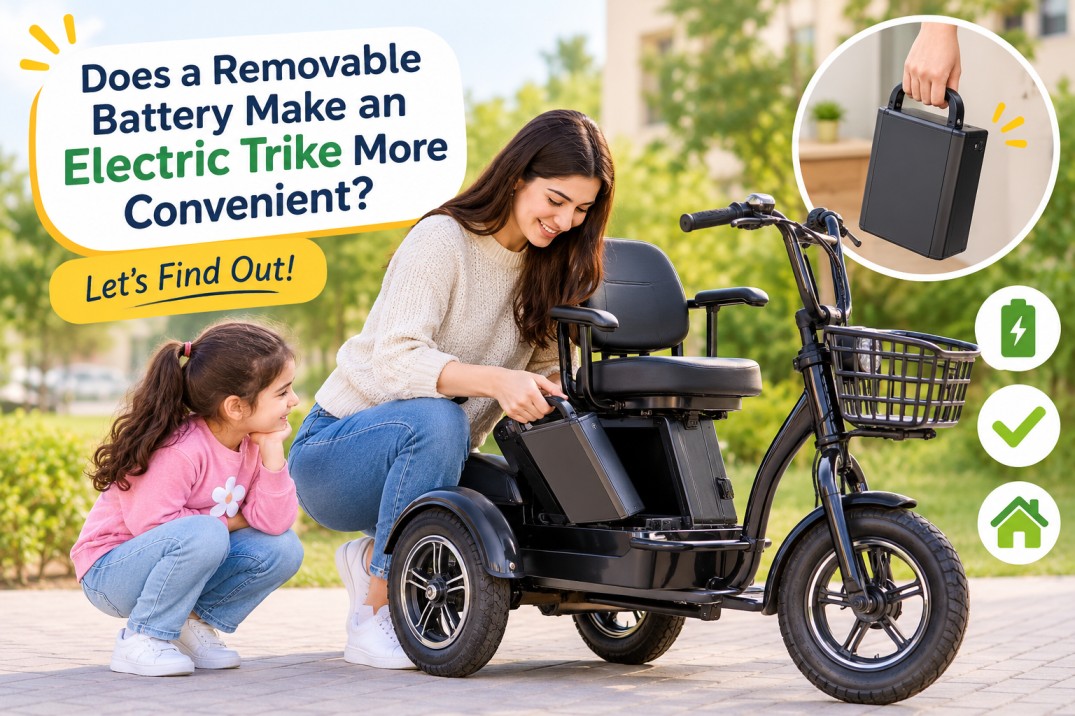
Electric trikes are becoming a popular choice for people who want comfortable and convenient everyday transportation. But when choosing one, the battery is an important feature to consider. Some models come with a fixed battery, while others have a removable one. A removable battery can make charging easier, especially when there is no power outlet near the parking area. But does this feature really make a difference? Let’s look at its benefits and limitations.
What Is a Removable Battery?
A removable battery is a power unit that can be taken out of the vehicle without moving the entire vehicle near a charging point. It is usually fitted into a special compartment and secured with a lock or fixing system.

Once removed, the battery can be carried indoors and connected to a compatible charger. When it is fully charged, you can place it back into its compartment.
This design is useful for people who park their vehicles outside, in shared parking areas, or somewhere without easy access to electricity.
6 Benefits of Having a Removable Battery
1. Easier Charging at Home
One of the biggest advantages is that you do not need to move the entire vehicle to charge its battery. You can simply remove the battery and take it to a convenient charging location.
For example, if your vehicle is parked in a garage or outside your home, you can bring the battery indoors and connect it to a suitable power outlet.
This saves effort and makes daily charging much simpler.
2. Convenient for People Living in Apartments
People living in apartments may not always have access to a private charging point near their parking space.
A removable battery solves much of this problem. Instead of arranging a charging connection in the parking area, you can carry the battery inside your home.
This is especially helpful when the parking space is far from the nearest electrical outlet.
3. Easier Battery Maintenance
A removable battery is easier to inspect because you can access it without moving the entire vehicle.
You can check its outer condition, charging connection, and battery compartment for dust or moisture. Regular inspection can help you notice problems early.
However, avoid opening the battery casing yourself. Internal battery repairs should always be handled by a qualified technician.
4. Better Storage During Extreme Weather
Hot weather, direct sunlight, and moisture can affect battery performance over time.
With a removable design, you can take the battery indoors when the vehicle is not being used for longer periods. Keeping it in a cool, dry location can help protect it from harsh outdoor conditions.
Always follow the manufacturer’s recommended storage temperature and battery care instructions.
5. More Flexibility in Daily Use
A removable battery gives you more freedom when deciding where and how to charge your vehicle.
You can park in a suitable location and charge the battery separately. This can be helpful for people who use their vehicle regularly but do not have a dedicated charging space.
Some models also allow battery replacement when the original battery becomes old or loses its capacity. However, any replacement must be compatible with the vehicle.
6. Easier Battery Replacement
Like other rechargeable batteries, these units lose some capacity over time. Eventually, they may not provide the same riding distance as they did when new.
A removable design can make replacement more convenient because the battery can be taken out without major work on the vehicle.
Still, you should always purchase a compatible battery recommended by the manufacturer.

Removable vs Fixed Battery: Which Is Better?
Both battery types have their own advantages. The right choice depends on your parking space, charging arrangements, and daily routine.
| Feature | Removable Battery | Fixed Battery |
|---|---|---|
| Charging | Can be charged separately | Usually charged on the vehicle |
| Portability | Can be carried indoors | Cannot be carried separately |
| Security | Can be stored indoors | Remains attached |
| Maintenance access | Easier to inspect externally | May require more access to the vehicle |
| Convenience | Useful without a nearby outlet | Convenient with a dedicated charging point |
A removable battery is generally more suitable for people who need flexible charging options. A fixed battery can work well for people who have a convenient parking and charging setup.
Are There Any Disadvantages?
Although removable batteries offer several benefits, there are a few things to consider before making a decision.
Battery weight: Some batteries can be heavy. If you need to carry one up stairs every day, its weight may become inconvenient.
Risk of damage: Repeated removal and installation can damage connectors if the battery is handled carelessly.
Security: A removable battery needs to be stored safely. Leaving it unattended or in an unsecured location can increase the risk of theft.
Additional cost: Models with removable battery systems may cost more than some fixed-battery alternatives.
Compatibility: Not every battery works with every vehicle. Voltage, capacity, connectors, and battery specifications must match the manufacturer’s requirements.
What Should You Check Before Buying?
If you are planning to buy an electric tricycle, do not choose a model based on its battery design alone. Consider these important points:
- Battery weight: Check whether you can comfortably lift and carry it.
- Charging time: Find out how long it takes to reach a full charge.
- Battery capacity: Check the capacity and expected riding distance.
- Safety lock: Make sure the battery stays securely in place while riding.
- Replacement availability: Check whether compatible replacement batteries are available.
- Warranty: Understand what battery-related issues are covered.
- Charger compatibility: Always use the recommended charger.
Online shopping platforms such as ToysUAE make it easier to explore different vehicle options and compare their features before making a purchase. Reading the product specifications carefully can help you choose a model that matches your daily needs.
Final Thoughts
A removable battery can make an electric vehicle much easier to use, especially when charging facilities are not available near the parking space. It offers flexibility, easier storage, and convenient battery access.
However, it is not necessary for everyone. If you have a suitable charging point and rarely need to move the battery, a fixed design may be enough.
Before making your decision, consider your parking arrangements, battery weight, charging needs, and overall comfort. The best choice is the one that makes your daily routine easier.
Frequently Asked Questions (FAQs)
1. Is a removable battery better than a fixed battery?
A removable battery is better for people who need flexible charging options. A fixed battery can be suitable for those with easy access to a charging point.
2. Can I charge a removable battery inside my home?
Yes. You can charge it indoors using the manufacturer’s recommended charger. Always follow the charging instructions and use a safe, dry, and well-ventilated location.
3. How long does a removable battery take to charge?
Charging time depends on battery capacity, charger output, and its current charge level. Check the manufacturer’s specifications for an accurate estimate.
4. Does removing the battery increase its lifespan?
Not directly. However, storing it properly and protecting it from extreme temperatures can help maintain its condition over time.
5. Can I replace a removable battery myself?
Some models allow easy battery removal and replacement. However, you should only use a compatible battery and follow the manufacturer’s instructions.
6. Are removable batteries safe to carry?
Yes, when handled correctly. Make sure the battery is switched off or disconnected as instructed, use its handle if available, and avoid dropping or damaging it.
7. Should I remove the battery when the vehicle is not in use?
If you will not use the vehicle for an extended period, removing and storing the battery may be helpful if the manufacturer recommends it. Keep it in a cool, dry place and maintain the recommended charge level.