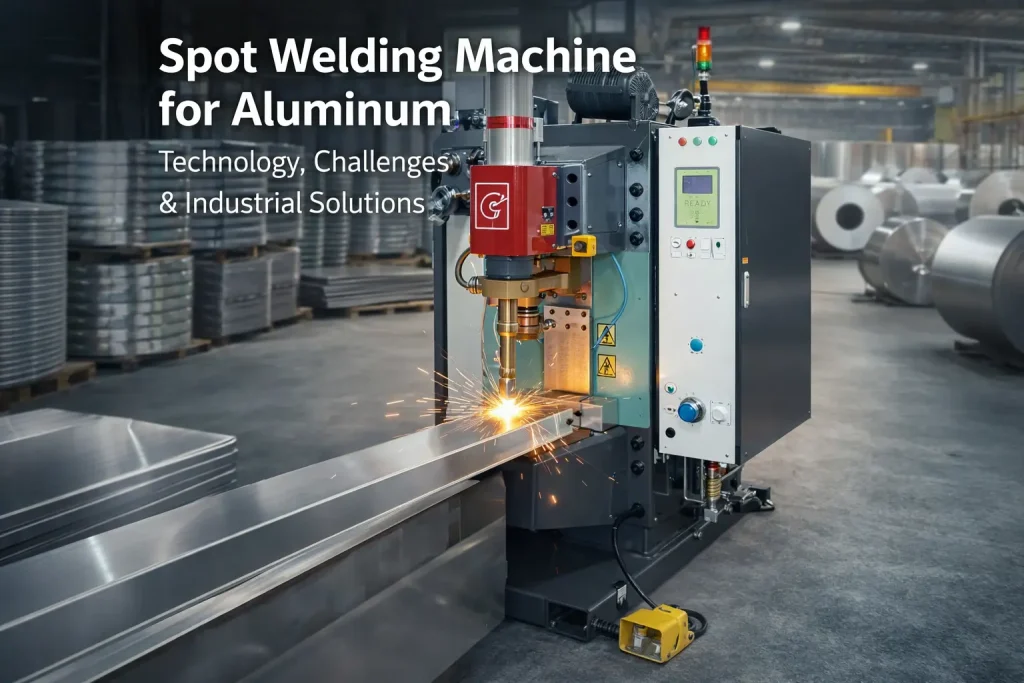
In today’s high-volume manufacturing environment, joining aluminum efficiently and reliably is a growing challenge. From automotive body panels to aerospace components, aluminum’s lightweight and corrosion-resistant properties make it a material of choice but its high thermal conductivity and oxide layer demand precise welding techniques. For manufacturing engineers, OEMs, and automation integrators, selecting the right spot welder for aluminum is critical to achieving strong, repeatable welds while maintaining production efficiency.
At Heron Welder, we specialize in delivering industrial-grade welding solutions optimized for aluminum, ensuring your factory achieves superior quality, productivity, and automation readiness.

Understanding Spot Welding for Aluminum
Spot welding is a type of resistance welding where two or more metal sheets are joined at localized points using pressure and an electric current. While widely used for steel, aluminum presents unique challenges:
- High thermal conductivity: Aluminum dissipates heat faster than steel, requiring higher current or longer weld time to reach sufficient fusion.
- Oxide layer: Aluminum naturally forms a thin oxide layer that is electrically resistive, which can impede current flow and affect weld consistency.
- Softness and ductility: Aluminum sheets can deform or “squish” under excessive electrode pressure.
A spot welder for aluminum must address these factors through precise control of current, force, and timing, ensuring consistent weld nugget formation without damaging the material.
Applications of Aluminum Spot Welding
Aluminum spot welding is widely applied across industries where lightweight, corrosion-resistant assemblies are critical:
- Automotive Manufacturing: Joining aluminum body panels, chassis components, and battery enclosures in electric vehicles.
- Aerospace: Welding thin-gauge aluminum sheets for fuselage, interior panels, and structural components.
- Electronics & Enclosures: Producing heat sinks, casings, and frames requiring precise weld points.
- Appliances & Industrial Equipment: Fabricating aluminum cabinets, panels, and frameworks efficiently.
By implementing the right spot welder for aluminum, manufacturers can achieve strong, visually consistent welds while maintaining high throughput.
Choosing the Right Spot Welder for Aluminum
Selecting an aluminum spot welder requires considering material thickness, production volume, and automation requirements. Key factors include:
1. Welding Power and Control
Aluminum’s high conductivity demands a welder capable of delivering precise, high-current pulses. MFDC (Medium-Frequency Direct Current) spot welders are particularly effective, offering rapid current rise and programmable pulse control to handle thin and thick sheets with consistent results.
2. Electrode Design and Cooling
Electrode geometry, material, and cooling are critical. Copper-chrome electrodes with efficient water cooling prevent overheating and reduce wear, ensuring longer life and consistent weld quality.
3. Automation and Integration
Modern manufacturing often requires automated welding lines. Robotic spot welders with integrated controllers can deliver repeatable welds, monitor electrode force, and adapt to production variations in real time, making them ideal for high-volume aluminum assemblies.
4. Safety and Process Monitoring
Advanced aluminum spot welders include real-time monitoring of current, voltage, and weld resistance, helping engineers detect anomalies before they impact quality. This is essential in industries like automotive and aerospace, where weld reliability is non-negotiable.
Benefits of Heron Spot Welders for Aluminum
As a global leader in industrial welding equipment, Heron Welder delivers tailored solutions that address aluminum’s unique challenges:
- Precision and Repeatability: Advanced MFDC spot welding technology ensures consistent nugget formation across production batches.
- Customizable Automation: Seamless integration with robotic arms, conveyors, and production lines for high-volume operations.
- Energy Efficiency: Optimized current profiles reduce power consumption while maintaining weld integrity.
- Durable Components: High-quality electrodes and controllers designed for long service life and minimal downtime.
Heron’s team works closely with manufacturing engineers and OEMs to configure spot welders that meet specific material, thickness, and production requirements.

Best Practices for Aluminum Spot Welding
Maximizing weld quality requires attention to process parameters and setup:
- Surface Preparation: Remove contaminants and ensure sheets are clean. A thin oxide layer can reduce electrical conductivity.
- Optimize Weld Parameters: Adjust current, force, and time based on sheet thickness and joint configuration.
- Electrode Maintenance: Regularly dress and monitor electrodes to maintain consistent contact and cooling efficiency.
- Use Monitoring Systems: Employ weld monitors or quality sensors to detect deviations and prevent defective parts.
- Test and Validate: Conduct destructive and non-destructive testing during setup to fine-tune parameters and confirm joint strength.
Following these best practices ensures a strong, repeatable weld while reducing scrap and rework costs.
Spot Welding vs. Other Aluminum Joining Methods
While spot welding is highly effective, engineers sometimes consider alternatives:
- Laser Welding: Provides precise, narrow welds for thin sheets but requires higher investment and maintenance.
- Friction Stir Welding (FSW): Ideal for thick sections, producing solid-state welds with minimal distortion.
- Mechanical Fastening: Rivets or bolts are simple but add weight and assembly time.
For high-volume, thin-to-medium aluminum assemblies, spot welding remains the fastest, most cost-effective solution especially when paired with Heron’s advanced MFDC or robotic systems.
FAQs About Aluminum Spot Welding
Q1: Can spot welders handle mixed aluminum and steel joints?
A: Yes, but process parameters must be carefully tuned to account for the different thermal and electrical properties of each metal.
Q2: What thickness of aluminum can be spot welded?
A: Heron spot welders can handle thin sheets from 0.5 mm up to thicker panels around 5 mm, depending on machine configuration.
Q3: How often should electrodes be maintained?
A: Electrode dressing frequency depends on production volume and material type. Regular inspection ensures consistent weld quality.
Q4: Are Heron spot welders compatible with robotic automation?
A: Absolutely. They can integrate with robotic arms, conveyors, and fully automated production lines.
Q5: Is MFDC better than traditional AC spot welding for aluminum?
A: Yes. MFDC offers faster current rise, stable heat input, and better repeatability, which is ideal for aluminum’s high conductivity.
Partner with Heron for Aluminum Spot Welding Solutions
Choosing the right spot welder for aluminum can transform your manufacturing efficiency, product quality, and automation capabilities. At Heron Welder, we provide customized, industrial-grade welding solutions tailored to your production requirements.
Whether you need a single MFDC spot welder, robotic integration, or a complete automated line, our team of experts is ready to consult, configure, and deliver systems that meet the highest standards.
Contact Heron today to request a quote or consult our specialists for your aluminum welding and automation needs.