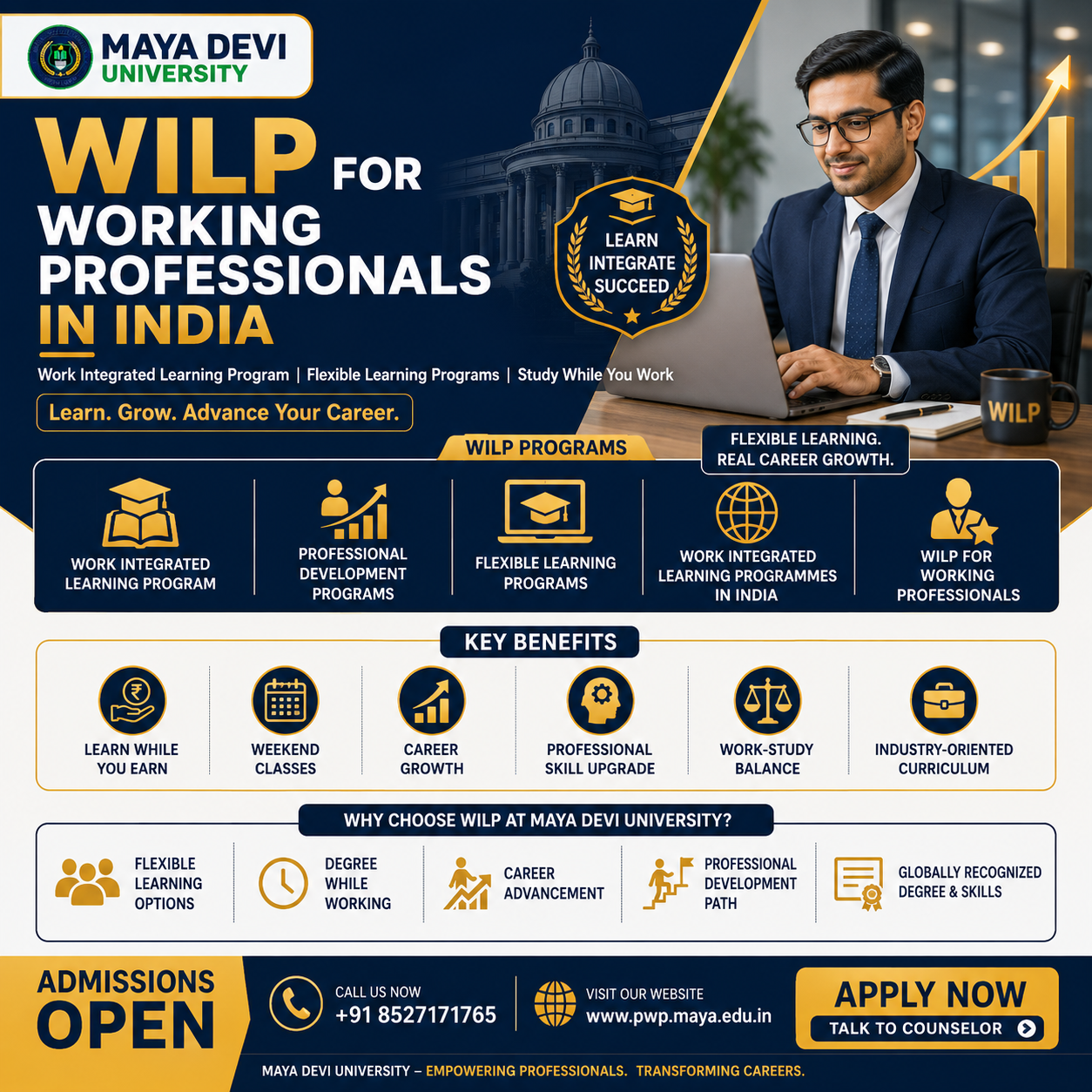
Continuing your education while managing a full-time job is not easy. Many professionals want better qualifications, stronger skills, and improved career prospects, but regular courses often require fixed daytime attendance and a full-time academic commitment. For most working adults, that is difficult to manage.
This is where WILP can be a practical option. A work integrated learning program is designed to help professionals study alongside their jobs. It offers a more flexible path for those who want to grow without stepping away from work.
In this guide, we will look at the difference between WILP and regular courses, where each option fits best, and how working professionals in India can choose the right learning path for long-term career growth.
What Is WILP?
A Work Integrated Learning Program (WILP) is a learning model that combines formal education with ongoing work experience. It is designed for people who want to continue working while pursuing a degree or professional qualification.
Unlike traditional full-time courses, WILP programs usually offer flexible schedules, weekend classes, online support, or blended learning formats. This helps a working professional build skills without putting their job on hold.
The growing interest in WILP for working professionals in India reflects a simple reality: many people need education that fits around their career, not the other way around. For those seeking a professional skill upgrade, this model can be easier to manage than a conventional campus course.
What Are Regular Courses?
Regular courses follow the traditional full-time education model. Students usually attend classes on campus during fixed hours, take part in scheduled academic activities, and complete coursework within a structured semester system.
This format works well for students who can dedicate most of their time to studies. It is often preferred by recent school graduates or learners who want a full campus experience with classroom interaction, extracurricular activities, and peer networking.
Regular courses can offer strong academic immersion, but they may not be practical for someone already balancing job responsibilities, family commitments, and limited weekday availability.
WILP vs Regular Courses: Flexibility and Schedule
One of the biggest differences between WILP and regular courses is flexibility.
A regular course generally follows a fixed daytime schedule. Students are expected to attend lectures, labs, and academic sessions on campus throughout the week. This structure can be difficult for employed learners.
WILP programs are built with flexibility in mind. Many include weekend classes, evening sessions, online learning components, or blended formats. This makes them more suitable for people who cannot leave their jobs to study full-time.
If your priority is to continue earning while learning, WILP is usually the more practical option.
WILP vs Regular Courses: Learning Experience
Regular courses focus on classroom-based learning. They often emphasize theory, group projects, campus interaction, and full-time academic participation.
A work integrated learning program offers a different experience. It connects academic concepts with real workplace situations. Instead of learning only in theory, students can apply what they study directly to their current roles.
This work-linked structure can be especially useful in fields where practical understanding matters as much as academic knowledge. For working professionals, that direct connection between study and job responsibilities often adds more immediate value.
WILP vs Regular Courses: Career Growth and Practical Relevance
For many professionals, the main reason to return to education is career growth.
Regular courses can help build qualifications and foundational knowledge, especially for students at the beginning of their careers. They may also support long-term job opportunities after graduation.
WILP programs, however, are often more closely tied to immediate workplace outcomes. A learner may be able to use new skills in their current role, take on more responsibility, or strengthen their profile for internal promotions. This is one reason WILP programs are becoming more relevant for professionals looking for steady advancement rather than a full career pause.
That said, the outcome depends on factors such as the institution, course quality, industry relevance, and whether the program aligns with your goals.
WILP vs Regular Courses: Time and Cost Considerations
Time commitment is another major factor.
A regular course typically demands full-time attention. In addition to tuition, students may need to consider commuting, relocation, housing, and the opportunity cost of not working.
WILP can reduce some of these pressures because it supports a learn while you earn approach. Since professionals continue working, they may be able to manage education costs without stepping away from their income. For many adult learners, this makes WILP one of the more realistic flexible learning programs available today.
Still, affordability should not be judged by fees alone. You should also consider the long-term value of the program, recognition status, and how well it supports your career path.
WILP vs Regular Courses: Who Each Option Suits Best
Both options have value, but they serve different needs.
WILP is often a better fit for:
- Working professionals with limited weekday availability
- Employees aiming for promotions
- Diploma holders seeking academic progression
- Career switchers who want to upskill without leaving their jobs
- Learners looking for professional development programs with practical relevance
Regular courses are often a better fit for:
- Students who can study full-time
- Fresh school or college graduates
- Learners who want campus life and in-person academic engagement
- Those who prefer a structured classroom routine
The right choice depends less on which format is “better” in general and more on which one matches your current stage of life and career.
Why WILP Is Often a Better Fit for Working Professionals
For employed learners, WILP usually solves a practical problem: how to continue studying without disrupting work.
A professional working in operations, IT, business, or technical roles may not be able to attend weekday lectures. In such cases, WILP provides a more manageable route. Flexible delivery, practical assignments, and career-linked learning can make study easier to sustain over time.
It can also support confidence at work. When learners apply new ideas in real projects, meetings, or team responsibilities, the impact of education becomes visible sooner. That is why WILP for working professionals is often seen as a useful option for those seeking a clear and structured professional skill upgrade.
Advantages of Regular Courses
A balanced comparison also means recognizing where regular courses are strong.
Traditional courses offer a full academic environment. Students can spend more time with faculty, participate in campus activities, and build networks through day-to-day interaction. This can be valuable for younger learners who are still exploring career options or developing foundational knowledge.
Regular courses may also suit learners who want uninterrupted academic focus before entering the workforce. In some fields, full-time study remains the more natural path, especially at the start of a career.
Top Benefits of WILP for Working Professionals
- Continue working while studying
- Attend classes through more flexible formats, including weekend schedules
- Apply new concepts directly to current job responsibilities
- Build qualifications without taking a career break
- Support promotion goals and long-term career progression
- Access more industry-aligned learning than many traditional formats
- Improve work-study balance compared with full-time regular courses
Who Should Choose WILP Programs?
WILP programs can be a strong option for several types of learners in India:
- Working professionals who want to continue their education without leaving their jobs
- Employees seeking promotions and stronger qualifications for the next role
- Diploma holders looking to move toward a degree pathway
- Career switchers planning to enter a new field while staying employed
- Professionals focused on development who want practical, career-linked education
Before enrolling, it is important to review eligibility criteria, recognition details, and the course structure offered by the institution.
How to Choose the Right Learning Option
Choosing between WILP and regular courses starts with clarity about your goals.
First, ask what you want from the program. Are you looking for faster career progression, a qualification for promotion, deeper technical knowledge, or a complete academic experience?
Next, assess your schedule honestly. If you work full-time or have family responsibilities, flexible study options may be essential.
You should also compare:
- University recognition and approvals
- Course curriculum and industry relevance
- Faculty expertise and academic support
- Learning format, including online or weekend delivery
- Long-term career outcomes
Where relevant, review guidance from bodies such as UGC India, AICTE, and broader policy direction under the National Education Policy (NEP). This can help you make a more informed choice.
Why Consider Maya Devi University for WILP?
If you are exploring WILP options, Maya Devi University may be worth considering for its focus on flexible and career-oriented learning.
The university’s approach is designed to support learners who need a practical format, including options that fit around work schedules. For working adults, features such as weekend learning support, industry-relevant curriculum, and guidance from experienced faculty can make a real difference.
As with any institution, it is best to review the latest program details, eligibility requirements, and recognition information before applying. If the course structure matches your goals, WILP programs at Maya Devi University could be a useful step toward continued learning and career development.
Conclusion
When comparing WILP and regular courses, the better option depends on your circumstances.
Regular courses remain valuable for full-time students who want a traditional academic experience. But for many employed learners, WILP offers a more practical path. It supports continued income, flexible study, and learning that connects more directly with the workplace.
If you are a working professional looking for a realistic way to study without stepping away from your job, a work integrated learning program may be the right fit. Take time to compare course structure, recognition, and long-term value before deciding. If you are exploring flexible options, you can also review the available WILP programs at Maya Devi University to see whether they align with your goals.
FAQs
What is the difference between WILP and regular courses?
WILP is designed to help learners study while working, often through flexible or weekend-based formats. Regular courses usually require full-time, campus-based attendance during fixed hours.
Is WILP good for working professionals?
Yes, WILP can be a good option for working professionals because it is structured to support study alongside employment. It is especially useful for those who need flexibility and practical relevance.
Can I study while working full-time?
Yes, many WILP programs are designed for full-time employees. However, success depends on your schedule, workload, and ability to manage study time consistently.
Are WILP programs flexible?
Many WILP programs offer flexibility through weekend classes, online support, or blended learning. The level of flexibility can vary by institution and program.
Which is better for career growth: WILP or regular courses?
For working professionals, WILP is often more practical because it combines continued work experience with formal education. For full-time students, regular courses may still be the better fit.
Do employers value WILP degrees?
Employers generally value qualifications from recognized institutions, especially when the course is relevant to the role. Recognition, curriculum quality, and practical application all matter.
How do I choose the best WILP program?
Look for a recognized institution, a relevant curriculum, flexible delivery, experienced faculty, and a program that aligns with your long-term career goals.
Leave a Reply