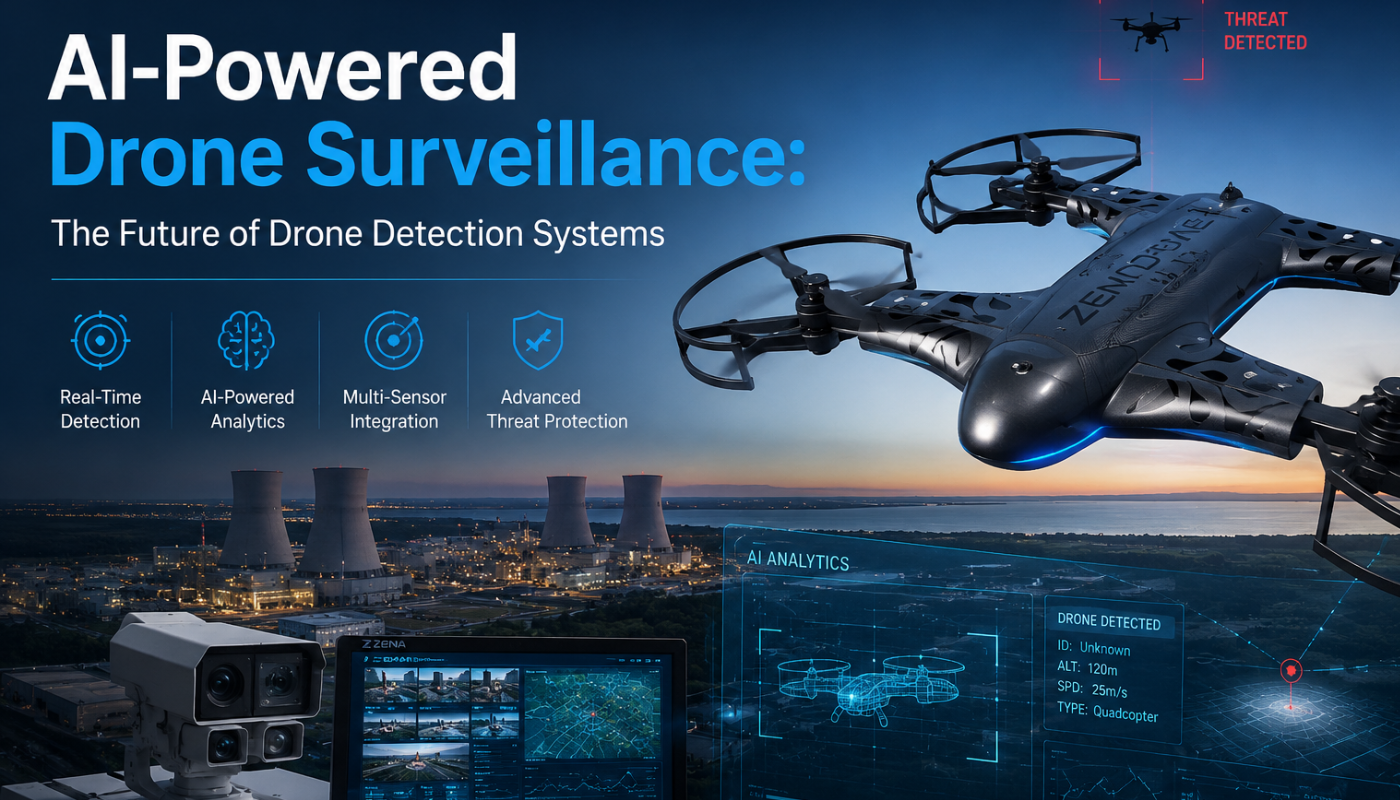
As drones become increasingly accessible and capable, organizations worldwide face new security challenges. From unauthorized surveillance and smuggling operations to potential threats against critical infrastructure, the need for effective drone detection systems has never been greater. AI-powered drone surveillance is transforming how governments, military organizations, airports, and private enterprises detect, track, and respond to aerial threats.
Modern drone detection systems leverage artificial intelligence, machine learning, computer vision, radar technology, RF sensors, and thermal imaging to identify unauthorized unmanned aerial vehicles (UAVs) in real time. AI-powered platforms can analyze data from multiple sensors simultaneously, improving detection accuracy and reducing false alarms.
What Is an AI-Powered Drone Surveillance System?
AI-powered drone surveillance system refers to the use of artificial intelligence technologies to monitor, detect, classify, and track drones operating within a protected airspace. Unlike traditional surveillance systems that rely heavily on human operators, AI systems automatically analyze vast amounts of sensor data and identify potential threats in real time.
These systems combine information from multiple sources, including:
- Radar sensors
- Radio Frequency (RF) detectors
- Electro-optical cameras
- Thermal imaging devices
- Acoustic sensors
- AI-powered analytics platforms
The integration of these technologies enables security teams to identify unauthorized drones faster and more accurately than conventional methods.
Why Drone Detection Systems Are Important
The rapid growth of commercial and recreational drone usage has created significant security concerns across multiple industries. Unauthorized drones can pose risks such as:
Security Breaches
Drones can capture sensitive information, conduct surveillance, and bypass traditional perimeter security measures.
Critical Infrastructure Threats
Power plants, oil refineries, telecommunications facilities, and transportation hubs are increasingly vulnerable to drone incursions.
Airport Safety Risks
Unauthorized drones near airports can disrupt flight operations and create dangerous situations for aircraft.
Public Event Protection
Large gatherings and public events require comprehensive airspace monitoring to prevent security incidents.
Advanced drone detection systems help organizations maintain control of their airspace and respond proactively to potential threats.
How AI Enhances Drone Detection Technology
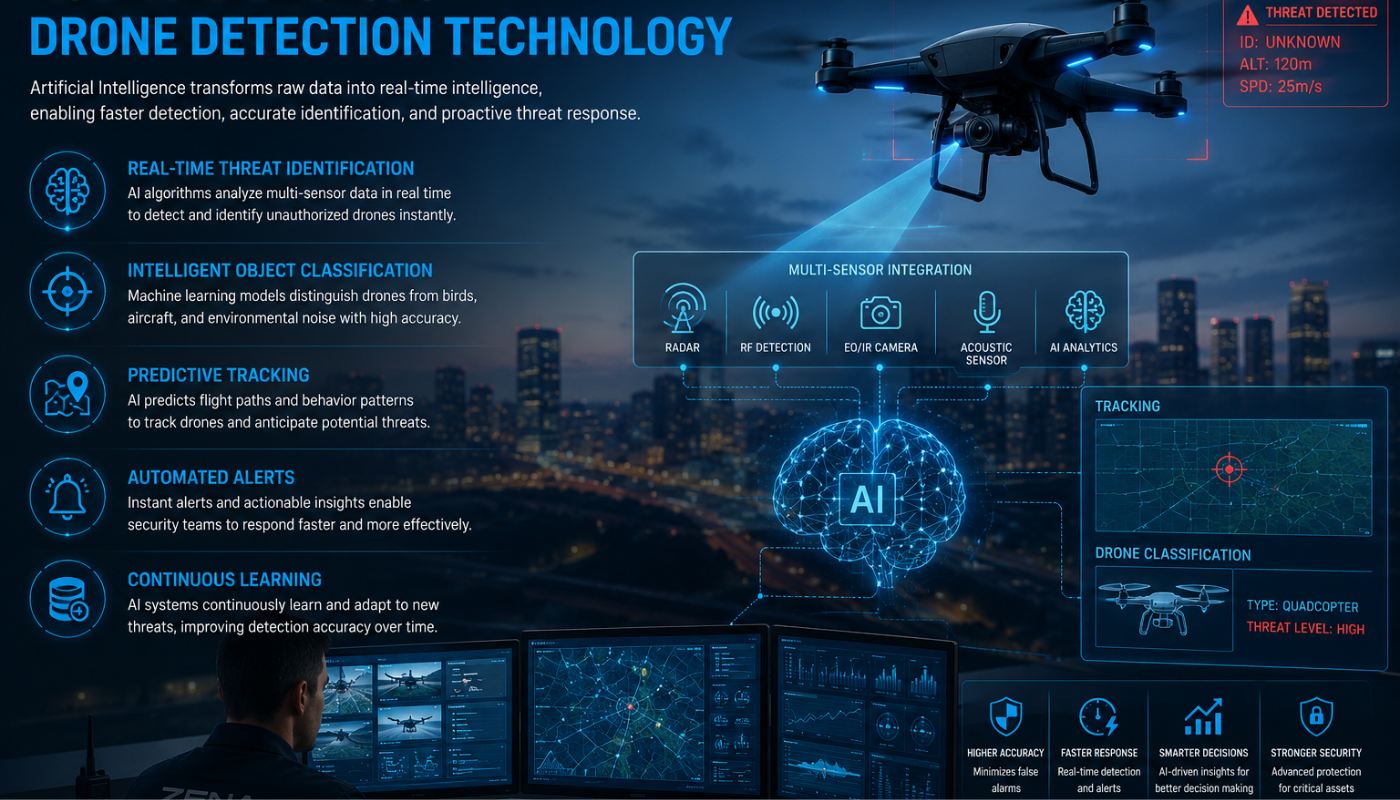
Artificial intelligence significantly improves the performance of modern drone detection systems by automating threat recognition and analysis.
Real-Time Threat Identification
AI algorithms continuously process incoming sensor data to detect suspicious aerial activity. Machine learning models can distinguish drones from birds, aircraft, and environmental noise, minimizing false positives.
Intelligent Object Classification
Using computer vision and deep learning technologies, AI systems can classify different drone types, estimate their capabilities, and assess threat levels.
Predictive Tracking
AI-powered surveillance platforms can predict drone flight paths based on movement patterns, helping security personnel anticipate potential threats before they reach sensitive areas.
Automated Alert Systems
When an unauthorized drone is detected, AI systems instantly notify security teams and provide actionable intelligence for rapid response.
Key Components of AI-Powered Drone Surveillance Systems
Radio Frequency Detection
RF sensors monitor communication signals between drones and their operators. This technology can identify drones before they become visually detectable.
RF-based drone detection is particularly effective for early warning and drone identification purposes. Machine learning models have demonstrated exceptionally high accuracy in detecting drone communication signals.
Radar-Based Detection
Modern radar systems track drones over long distances and provide precise location information.
AI-enhanced radar platforms can detect, classify, and track multiple drones simultaneously, even in challenging environments.
Thermal and Optical Cameras
Thermal imaging cameras detect heat signatures, while optical cameras provide visual confirmation of drone activity.
Combined with AI-powered image analysis, these sensors enable accurate drone identification during both day and night operations.
Acoustic Detection
Acoustic sensors use advanced microphones and AI algorithms to recognize drone sound signatures.
This technology offers a cost-effective alternative for detecting low-flying drones in urban and critical infrastructure environments.
Applications of AI-Powered Drone Surveillance
Military and Defense Operations
Military organizations use AI-powered drone surveillance to protect personnel, equipment, and strategic assets from hostile UAVs.
Advanced counter-UAS systems combine radar, RF scanning, and AI-based threat classification to provide layered airspace protection.
Critical Infrastructure Protection
Power stations, oil facilities, water treatment plants, and telecommunications networks require continuous monitoring against drone threats.
AI surveillance systems provide 24/7 protection while reducing operational workload for security teams.
Airport Security
Airports rely on drone detection systems to prevent disruptions and maintain safe flight operations.
Real-time drone tracking enables rapid threat assessment and response before drones enter restricted airspace.
Border Security
Government agencies deploy AI-powered surveillance systems along borders to detect unauthorized drone activity and prevent smuggling operations.
Benefits of AI-Powered Drone Detection Systems
Enhanced Accuracy
AI algorithms improve detection rates while minimizing false alarms, enabling more reliable security operations.
Faster Response Times
Real-time analysis allows security personnel to react immediately to emerging threats.
Scalable Protection
Modern AI surveillance systems can monitor large geographic areas and manage multiple drone threats simultaneously.
Cost Efficiency
Automation reduces the need for constant manual monitoring and improves overall operational efficiency.
Continuous Monitoring
AI-powered systems provide round-the-clock surveillance, ensuring comprehensive airspace security.
The Future of AI-Powered Drone Surveillance
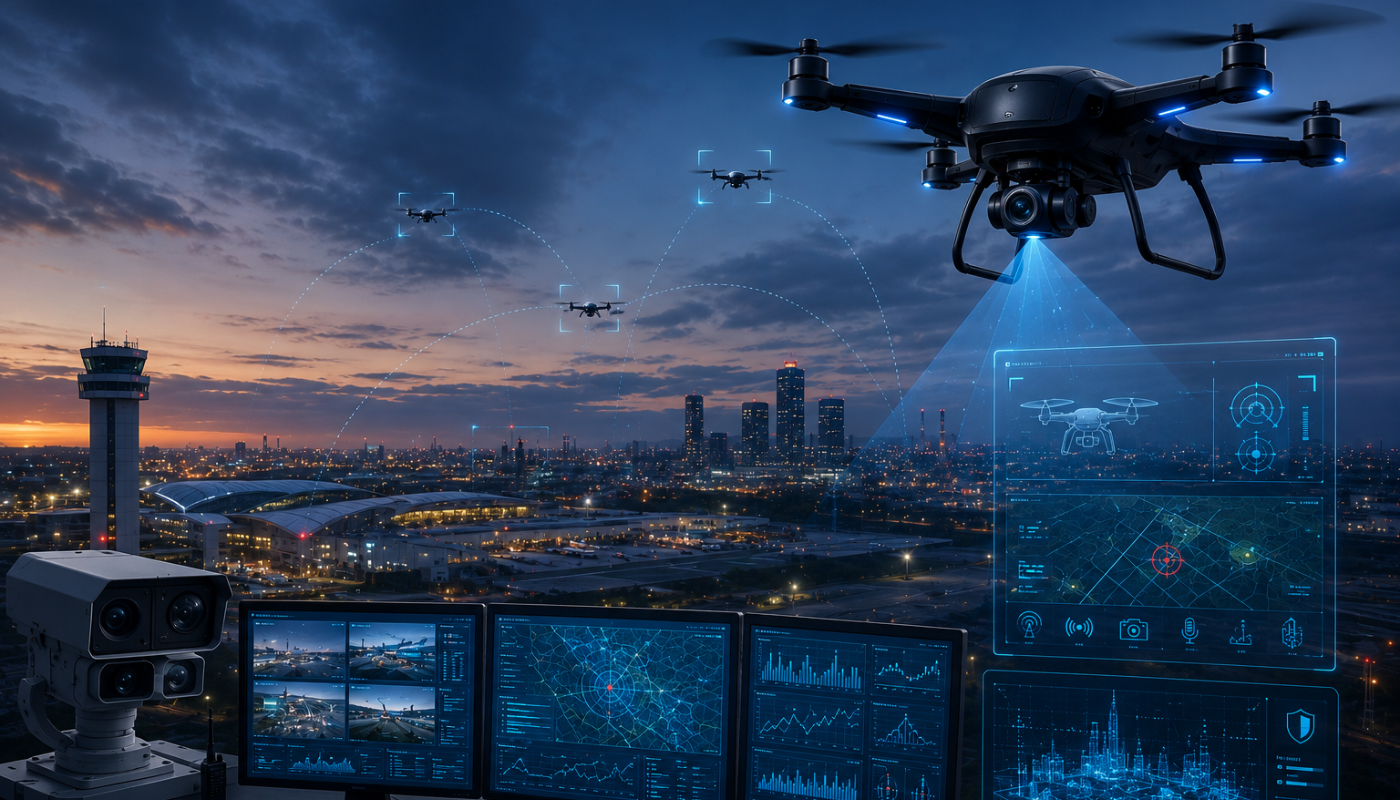
As drone technology continues to evolve, so will the need for more sophisticated detection solutions. Future drone detection systems are expected to incorporate advanced sensor fusion, autonomous threat assessment, swarm detection capabilities, and predictive analytics.
Emerging AI technologies will further enhance the ability to detect, classify, and respond to increasingly complex aerial threats. Multi-layered surveillance architectures that combine radar, RF detection, thermal imaging, acoustic sensors, and AI-driven analytics are becoming the industry standard for comprehensive airspace security.
ZenaDrone: Advancing AI-Powered Drone Technology
ZenaDrone is at the forefront of innovation in AI-powered drone technology, developing intelligent aerial solutions designed to enhance security, surveillance, inspection, and operational efficiency across multiple industries. By combining advanced drone hardware with artificial intelligence, machine learning, and real-time data analytics, ZenaDrone delivers next-generation solutions that help organizations make faster and more informed decisions.
The company’s drone platforms are designed to operate autonomously while collecting and processing large volumes of data in real time. Equipped with high-resolution cameras, advanced sensors, GPS navigation systems, and AI-powered analytics, ZenaDrone solutions can identify objects, detect anomalies, track moving targets, and provide actionable intelligence without requiring constant human intervention.
One of the key advantages of Zena Drone’s AI-powered technology is its ability to improve situational awareness. Whether monitoring critical infrastructure, securing industrial facilities, supporting military operations, or conducting aerial inspections, the system can rapidly analyze environmental data and deliver accurate insights to operators. This enables organizations to respond more effectively to security threats, operational challenges, and safety concerns.
ZenaDrone also integrates intelligent automation capabilities that reduce manual workloads and improve operational efficiency. Through AI-driven flight planning, autonomous navigation, and predictive analytics, drones can perform complex missions with greater precision and reliability. These capabilities make them valuable tools for industries such as defense, agriculture, construction, logistics, energy, and public safety.
As the demand for smart aerial technologies continues to grow, Zena Drone remains committed to pushing the boundaries of innovation. By leveraging artificial intelligence, advanced sensor technologies, and autonomous flight systems, the company is helping shape the future of drone operations. Its AI-powered drone solutions provide organizations with a scalable, efficient, and intelligent platform for surveillance, monitoring, inspection, and data-driven decision-making in an increasingly connected world.
Conclusion
AI-powered drone surveillance represents a significant advancement in modern drone detection systems. By integrating artificial intelligence with radar, RF detection, thermal imaging, acoustic sensors, and computer vision technologies, organizations can achieve superior airspace awareness and threat mitigation capabilities. Get more information on searchies online about drones advanced technology.
Whether protecting critical infrastructure, securing airports, safeguarding military installations, or monitoring public events, AI-powered drone surveillance provides the intelligence and automation necessary to address today’s evolving aerial security challenges. Investing in advanced drone detection systems is no longer optional—it is an essential component of modern security and risk management strategies.