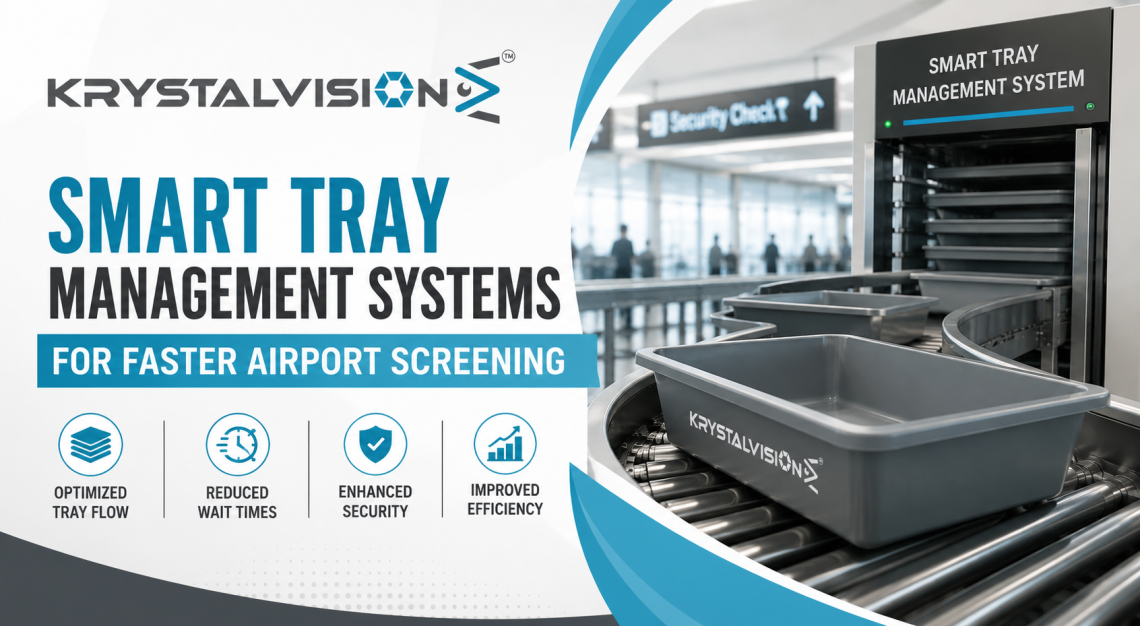
Airport security has become faster and more advanced over the years. Modern X Ray baggage scanner can detect threats with remarkable accuracy, yet one simple process often slows everything down—the manual handling of security trays.
Passengers frequently experience long queues not because of scanning delays but because empty trays need to be collected and carried back manually. This outdated process creates unnecessary waiting time, increases staff workload, and reduces checkpoint efficiency.
An ATRS for X Ray Baggage Scanner (Automatic Tray Return System) eliminates this problem by automating tray movement throughout the screening process. The result is faster passenger flow, improved security operations, and a better travel experience.
Why Manual Tray Handling Slows Airport Security
Although airport screening technology continues to evolve, many checkpoints still rely on manual tray management.
After passengers collect their belongings, security trays remain at the reclaim area. Security personnel must gather these heavy trays and carry them back to the beginning of the lane.
This process creates several operational challenges:
- Delays caused by tray shortages
- Security staff spending valuable time moving trays
- Congested screening lanes
- Increased physical strain on airport personnel
- Longer waiting times for passengers
Even the most advanced X-Ray baggage scanner cannot achieve maximum efficiency if tray movement remains manual.
How ATRS Supports Sustainable and Future-Ready Airport Operations
As airports continue to expand and passenger numbers increase, sustainability has become a major priority. An ATRS for X-Ray Baggage Scanner not only improves operational efficiency but also contributes to environmentally responsible airport management.
By automating tray movement, airports can reduce unnecessary energy consumption associated with repeated manual handling and inefficient checkpoint operations. Continuous conveyor-based tray circulation minimizes delays, allowing passengers to move through security more quickly. Shorter waiting times also help reduce congestion in terminal areas, creating a smoother travel experience.
Another significant advantage is the reduction in workplace strain for security personnel. Manually lifting and transporting heavy stacks of trays throughout the day can lead to fatigue and repetitive stress injuries. An automated tray return system eliminates this physically demanding task, creating a safer and more ergonomic working environment. As a result, security staff can dedicate more attention to monitoring baggage, assisting passengers, and responding to potential security concerns.
Modern ATRS for X-Ray Baggage Scanner solutions are also designed with scalability in mind. Airports can customize the system based on terminal size, passenger traffic, and available space. Whether installed in a regional airport or a major international hub, the modular design allows future upgrades without requiring a complete replacement of existing screening infrastructure.
Additionally, many advanced systems generate operational data that airport authorities can use to monitor tray circulation, identify bottlenecks, and optimize checkpoint performance. This data-driven approach enables better resource planning and continuous improvements in passenger screening efficiency.
As aviation continues to embrace digital transformation, integrating intelligent automation with advanced X-Ray baggage scanners is becoming the industry standard. Investing in an ATRS for X-Ray Baggage Scanner not only improves today’s security operations but also prepares airports for future passenger growth, evolving security requirements, and smarter terminal management. This combination of automation, efficiency, and safety makes ATRS an essential component of next-generation airport security systems.
What is an ATRS for X-Ray Baggage Scanner?
An Automatic Tray Return System (ATRS) is an intelligent conveyor-based solution designed to automate the movement of security trays.
Instead of requiring airport staff to return empty trays manually, the ATRS automatically collects them from the reclaim area and transports them back to the passenger loading point using an integrated conveyor system.
When combined with an ATRS for X-Ray Baggage Scanner, the entire screening lane operates as one continuous automated workflow.
Key components include:
- Motorized tray conveyors
- Smart sensors
- Automated return channels
- RFID-enabled tray tracking
- Intelligent lane management
This automation significantly improves checkpoint productivity while reducing manual effort.
How ATRS Improves Airport Screening Efficiency
1. Parallel Passenger Loading
Traditional security lanes force passengers to wait for the person ahead to finish unpacking.
Modern ATRS systems introduce multiple loading stations, allowing several passengers to prepare their belongings simultaneously.
Benefits include:
- Reduced waiting time
- Faster tray availability
- Improved passenger flow
- Less congestion during peak hours
2. Automated Tray Sorting
Not every bag passes inspection immediately.
An advanced ATRS for X-Ray Baggage Scanner uses RFID-enabled trays to identify luggage that requires additional screening.
The system automatically:
- Sends cleared baggage directly to passengers
- Diverts suspicious bags for secondary inspection
- Keeps the primary conveyor moving continuously
This prevents unnecessary interruptions to the entire screening process.
3. Forgotten Item Detection
Passengers often leave behind personal belongings such as:
- Mobile phones
- Wallets
- Keys
- Passports
- Boarding passes
Modern ATRS solutions include optical sensors that inspect empty trays before they enter the return conveyor.
If an item remains inside the tray, the system immediately alerts airport staff and the passenger.
Benefits of Using ATRS for X-Ray Baggage Scanner
Installing an automated tray return system delivers measurable operational improvements.
Faster Passenger Throughput
Automated tray movement reduces waiting time and increases screening capacity.
Many airports report passenger throughput improvements of up to 60% compared to conventional screening lanes.
Better Utilization of Security Staff
Instead of transporting trays manually, officers can focus on:
- Threat detection
- Passenger assistance
- Security monitoring
- Operational management
This improves both safety and productivity.
Improved Passenger Experience
A well-organized checkpoint reduces stress for travelers.
Passengers benefit from:
- Shorter queues
- Predictable waiting times
- Faster security clearance
- Better overall airport experience
Enhanced Space Utilization
ATRS systems use under-floor or side-mounted conveyor channels that minimize clutter around security lanes.
Benefits include:
- Cleaner layouts
- Improved accessibility
- Better use of terminal space
- Reduced congestion
Why Airports are Investing in Smart Tray Management
Global airports continue investing in automation to improve operational efficiency.
An ATRS for X-Ray Baggage Scanner supports these modernization goals by offering:
- Higher screening capacity
- Lower operational costs
- Reduced manual handling
- Improved workflow automation
- Enhanced passenger satisfaction
As airport traffic increases worldwide, automated tray return systems are becoming an essential component of next-generation aviation security.
KrystalVision’s Advanced Airport Screening Solutions
KrystalVision Image Systems Pvt. Ltd. develops advanced X-Ray baggage scanner solutions that support modern airport security operations.
Its screening systems are engineered for seamless integration with Automatic Tray Return Systems (ATRS), allowing airports to build intelligent, high-capacity security checkpoints.
By combining advanced threat detection with automated tray management, KrystalVision helps airports improve efficiency without compromising security.
The Future of Airport Security
Future airports will rely heavily on automation to create faster, safer, and more convenient passenger journeys.
An ATRS for X-Ray Baggage Scanner represents one of the most practical innovations in airport security by eliminating unnecessary manual tasks while maximizing screening performance.
As more airports adopt intelligent tray management systems, travelers can expect shorter queues, smoother screening, and an overall better airport experience.
Frequently Asked Questions
1. What is an ATRS for X-Ray Baggage Scanner?
An ATRS (Automatic Tray Return System) automatically returns empty security trays to the passenger loading area after screening. It improves workflow, reduces manual handling, and speeds up airport security operations.
2. Can ATRS work with existing X-Ray baggage scanners?
Yes. Most modern ATRS solutions are modular and can integrate with both new and existing X-Ray baggage scanners, depending on the airport’s infrastructure.
3. How does ATRS improve passenger flow?
By automatically returning trays and enabling multiple passenger loading stations, ATRS minimizes waiting times and keeps security lanes moving continuously.
4. What happens if a tray gets stuck?
Modern ATRS systems include intelligent jam detection sensors. If a blockage occurs, the affected section automatically stops and alerts operators for quick resolution.
5. Does ATRS improve airport security?
Yes. Since security personnel spend less time handling trays, they can focus entirely on baggage screening, threat detection, and passenger safety.