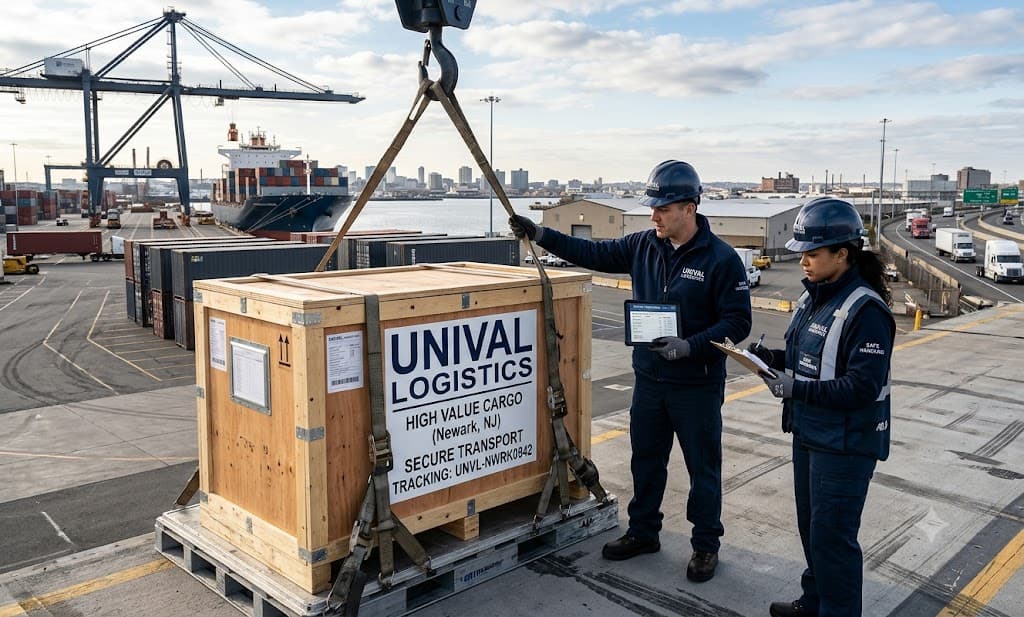
Summary: This guide explains how to plan secure cargo transportation, evaluate insurance coverage, prepare valuable goods for transit, and select logistics services that match shipment value and delivery requirements.
Overview

High-value cargo can include electronics, jewelry, precision instruments, business equipment, luxury goods, and other items that would be expensive or difficult to replace. Moving these goods safely requires a coordinated approach to packaging, documentation, carrier selection, shipment monitoring, and insurance.
For companies and individuals arranging high value shipping Newark, the best approach is to evaluate the entire shipment rather than choosing a service based on price alone. The cargo’s replacement value, dimensions, fragility, destination, and delivery deadline all influence the appropriate transportation method.
UNIVAL Logistics helps shippers consider their cargo requirements and plan transportation around protection, visibility, and delivery needs. By clarifying handling instructions, insurance arrangements, and delivery procedures before dispatch, shippers can make more informed logistics decisions.
Key Takeaways
- Assess the cargo’s value, dimensions, fragility, and handling requirements before booking.
- Choose a carrier or logistics provider with services appropriate for valuable goods.
- Review insurance terms, exclusions, deductibles, and claim requirements before shipping.
- Use suitable packaging, accurate documentation, and secure handover procedures.
- Monitor tracking updates and coordinate delivery with an authorized recipient.
- Request a shipment-specific quote because security, insurance, packaging, and transport requirements affect the total cost.
Quick Answer: Reliable high-value cargo shipping in Newark and Northern New Jersey starts with secure packaging, an appropriate carrier, verified insurance coverage, accurate documentation, and shipment tracking. UNIVAL Logistics can help evaluate these requirements before dispatch.
Understanding High-Value Cargo Shipping in Newark and Northern New Jersey
High-value cargo shipping involves transporting goods whose financial value, rarity, business importance, or replacement cost makes loss or damage particularly consequential. Unlike routine parcel delivery, these shipments may require specialized handling instructions, restricted access, additional security measures, higher insurance limits, or coordinated delivery appointments.
Newark and Northern New Jersey support a wide range of commercial activity, including warehousing, distribution, manufacturing, retail, and international trade. Businesses moving valuable inventory through the area should consider both the transportation method and the procedures used when cargo changes hands.
What Goods Require High-Value Shipping?
The right service depends on the type of cargo and the consequences of a loss. Common examples include:
- Jewelry and luxury goods: Watches, gemstones, precious metals, and other high-value merchandise.
- Electronics and technology: Computers, servers, telecommunications equipment, and specialized electronic components.
- Commercial and industrial equipment: Precision tools, diagnostic devices, machinery parts, and other expensive business assets.
- Fine art and collectibles: Artwork, antiques, rare collectibles, and items requiring careful environmental or physical protection.
- High-value retail inventory: Premium products, limited-edition merchandise, and goods being transferred between businesses or distribution facilities.
Each category may have different packaging, carrier acceptance, security, and insurance requirements. Some goods may also be subject to special restrictions or exclusions. Confirm that the selected provider accepts the particular commodity before booking.
How to Choose a Reliable High-Value Cargo Shipping Service
Selecting a shipping provider should involve more than comparing estimated delivery dates. Shippers need to understand how their cargo will be handled, what protections are available, and how the provider responds when something goes wrong.
Evaluate Experience With Valuable Shipments
Ask whether the provider regularly handles cargo similar to yours. Jewelry, fragile equipment, sensitive electronics, and industrial components can have very different requirements. A provider should be able to explain its process for secure collection, packaging coordination, shipment monitoring, and delivery confirmation.
When assessing high value shipping Newark, request details about the proposed service, including carrier arrangements, handling procedures, delivery options, and any restrictions that may apply to the shipment.
Confirm Security and Chain of Custody
A clear chain of custody helps establish who accepted the shipment, when it changed hands, and who received it. Depending on the cargo, suitable procedures may include documented handovers, restricted access, tamper-evident packaging, signature confirmation, and delivery to a verified recipient.
Ask which measures are actually included in the service. Security features vary by carrier and service level, and not every shipment automatically receives specialized protection.
Review Tracking and Delivery Coordination
Tracking provides useful information about shipment progress, but it does not guarantee that cargo is protected against theft, loss, or damage. For high-value shipments, establish who will monitor tracking alerts and respond to unexpected delays.
Coordinate the delivery address, operating hours, receiving contact, and signature requirements in advance. For valuable commercial equipment or inventory, arrange a secure receiving area so the cargo is not left unattended.
High-Value Cargo Insurance: What Shippers Need to Know
Insurance is an important part of a cargo protection plan because transportation arrangements alone may not cover the financial consequences of a loss. Before purchasing coverage, determine which policy applies and whether its terms match the shipment’s value and risks.
Declared Value Is Not Always Insurance
A carrier’s declared-value option may establish a limit on the carrier’s potential liability under its terms. It should not automatically be treated as comprehensive cargo insurance.
Cargo insurance may provide a separate form of protection, subject to the policy wording, covered events, exclusions, deductibles, limits, and claim conditions. The exact arrangement depends on the policy and shipment.
Before dispatch, ask the provider or insurer to clarify:
- Whether the shipment is insured or covered only under a carrier’s liability terms.
- How the insured value is calculated and whether shipping costs or other expenses are included.
- Whether theft, accidental damage, loss, and handling-related incidents are covered.
- Whether packaging standards, approved carriers, or signature requirements affect coverage.
- What documents are needed to submit a claim and what deadlines apply.
For high value shipping Newark, obtain confirmation of coverage in writing before the cargo enters transit. Do not assume that a standard parcel service or a carrier’s declared-value option provides the protection your goods require.
How to Establish the Appropriate Insured Value
The appropriate insured value depends on the policy and the goods being shipped. Supporting records may include a purchase invoice, commercial invoice, appraisal, inventory valuation, or other proof of value accepted by the insurer.
Keep copies of the shipment description, photographs, serial numbers where applicable, packaging records, and dispatch documents. Accurate records can help establish the cargo’s condition and value if a claim becomes necessary.
Packaging and Preparation for Valuable Cargo
Even a reputable carrier cannot eliminate every risk associated with transportation. Appropriate packaging helps reduce the likelihood of damage and may be a condition of insurance coverage.
Use Packaging Suited to the Goods
Fragile or precision items may require cushioning, protective inserts, rigid outer packaging, moisture protection, or specialized crating. Heavy equipment may need appropriate bracing and secure palletization. Jewelry and small valuable items may require discreet packaging and controlled handover procedures.
Avoid selecting packaging solely because it is inexpensive. The materials and packing method should be appropriate for the item’s weight, dimensions, fragility, and expected handling conditions.
Document the Shipment Before Dispatch
Before sealing the package, record the condition of the goods and retain photographs when appropriate. Check serial numbers, item descriptions, quantities, and invoice details. For commercial shipments, ensure the paperwork matches the actual contents.
Use packaging and labeling that comply with the carrier’s requirements. If the shipment contains restricted, regulated, hazardous, or otherwise specially controlled materials, verify the applicable acceptance and documentation rules before tendering the cargo.
Protect Confidentiality Without Misrepresenting Contents
Discreet external packaging may reduce unnecessary attention to valuable goods, but it must not conflict with carrier requirements, customs declarations, insurance conditions, or legal obligations. Shipment documents should accurately describe the contents and value wherever required.
Selecting the Right Transportation Method
There is no single shipping method that suits every high-value shipment. The appropriate choice depends on the cargo’s value, size, urgency, handling needs, destination, and available security measures.

Parcel and Express Services
Parcel or express shipping may suit smaller packages that meet the carrier’s size, commodity, and value restrictions. These services can offer tracking and delivery confirmation, but coverage limits and eligibility rules should be reviewed carefully.
Before booking, confirm that the carrier accepts the goods and that the service’s maximum liability or insurance arrangements are suitable.
Dedicated or Specialized Transport
Dedicated transportation may be worth evaluating for unusually valuable, fragile, bulky, or sensitive cargo. Depending on availability, this can allow more direct coordination and fewer transfers between vehicles or facilities.
Specialized handling does not automatically mean a shipment is insured or immune to risk. Verify the actual security procedures, delivery controls, and coverage terms being offered.
Freight Services for Larger Shipments
Freight transportation may be more appropriate for palletized inventory, industrial equipment, and other large consignments. Shippers should confirm how the cargo will be loaded, secured, transferred, and delivered.
For high-value freight, review liability limits, packaging responsibilities, loading arrangements, and any insurance requirements before accepting a quote.
High-Value Cargo Shipping Costs in Newark and Northern New Jersey
The cost of transporting valuable goods varies according to shipment specifications and the level of protection required. A small, high-value package may have different pricing considerations from a heavy pallet of commercial equipment, even when both have similar declared values.
Main Cost Components
- Base transportation and delivery: Quote required. Pricing depends on shipment dimensions, weight, distance, service speed, and the selected carrier.
- Cargo insurance: Quote required. The premium may depend on cargo value, commodity type, route, coverage terms, deductible, and loss history where applicable.
- Specialized packaging or crating: Quote required. Protective materials, custom crates, cushioning, and professional packing may increase the total cost.
- Additional security and handling: Quote required. Dedicated transport, controlled handovers, special delivery arrangements, or restricted-access handling may incur extra charges.
- Pickup, storage, and other logistics fees: Quote required. Residential or commercial collection, waiting time, storage, redelivery, and other service requirements may affect the final invoice.
Important Disclaimer
The cost prices and categories above are baseline planning estimates, not guaranteed market rates or fixed quotations. Actual charges are subject to market fluctuations, supplier changes, and variable logistics fees, as well as shipment specifications, carrier rules, insurance terms, and service availability. Contact UNIVAL Logistics for the latest and most accurate prices based on your cargo’s value, dimensions, destination, handling requirements, and requested delivery timeframe.
Common Risks and How to Reduce Them
High-value shipments can face several risks during collection, transit, storage, and final delivery. A practical shipping plan should identify the most relevant risks before the cargo leaves the sender.
Theft, Loss, and Unauthorized Access
Limit unnecessary access to the shipment and confirm who is authorized to collect and receive it. Use documented handovers and delivery confirmation appropriate to the cargo. Avoid leaving valuable goods unattended at collection points or delivery locations.
Physical Damage
Choose packaging suited to the goods and communicate any special handling requirements before dispatch. For fragile or heavy items, confirm whether the carrier requires particular packing standards or prohibits certain packaging arrangements.
Delays and Missed Deliveries
Incomplete addresses, incorrect contact details, missing documents, and unavailable recipients can interrupt delivery. Check shipment details carefully and arrange for an authorized person to receive the cargo.
Insurance Disputes
A claim may be complicated by inaccurate declared values, inadequate packaging, excluded commodities, missing records, or failure to follow policy requirements. Review coverage before dispatch and retain invoices, photographs, shipping documents, and all relevant correspondence.
How UNIVAL Logistics Can Help With High-Value Cargo Shipping
Planning valuable cargo transportation involves coordinating several connected decisions: which service to use, how the goods should be packaged, what insurance may be appropriate, and how collection and delivery will be managed.
UNIVAL Logistics can help shippers assess their transportation requirements, request suitable service options, and identify questions that should be resolved before booking. The goal is to make shipment arrangements more transparent and align the logistics plan with the cargo’s value and handling needs.
When requesting a quote, provide an accurate description of the goods, their approximate value, dimensions and weight, collection and delivery details, preferred transit time, and any special handling instructions. If insurance is required, request written confirmation of the proposed coverage and any conditions that must be met.
A well-prepared booking helps reduce avoidable uncertainty and gives the shipper a clearer understanding of the service being purchased.
A Practical Checklist Before Dispatch
Before sending valuable cargo from or through Newark and Northern New Jersey, confirm that the essential arrangements are in place.
- Verify the carrier accepts the commodity and shipment value.
- Confirm packaging requirements and record the cargo’s condition.
- Check that shipment documents and value declarations are accurate.
- Review applicable insurance coverage, exclusions, deductibles, and limits.
- Confirm tracking arrangements and delivery signature requirements.
- Verify the recipient’s details and coordinate a secure handover.
- Retain invoices, shipment records, and proof of delivery.
These steps are useful for businesses sending commercial inventory as well as individuals shipping valuable personal or collectible items.
Frequently Asked Questions
1. What is high-value cargo shipping?
High-value cargo shipping is the transportation of goods that warrant additional attention because of their financial value, replacement cost, fragility, or business importance. Depending on the shipment, it may involve specialized packaging, enhanced handling procedures, tracking, and suitable insurance.
2. How can I arrange high value shipping Newark?
Start by identifying the goods, their value, dimensions, weight, destination, and required delivery date. Then compare suitable transportation options, verify carrier restrictions, review insurance terms, and confirm collection and delivery procedures. UNIVAL Logistics can help you evaluate the requirements for a shipment-specific quote.
3. Does high-value shipping automatically include insurance?
No. A high-value shipping service does not necessarily include separate cargo insurance. Some carriers offer declared-value arrangements or limited liability, while other coverage may need to be arranged independently. Confirm the exact terms in writing before dispatch.
4. What types of cargo can be shipped using specialized services?
Depending on carrier acceptance and service restrictions, options may be available for jewelry, electronics, commercial equipment, collectibles, precision instruments, and valuable retail inventory. Certain commodities require special documentation, packaging, or handling and may be excluded by particular providers or insurers.
5. How much does high-value cargo shipping cost in Newark?
The cost depends on shipment dimensions, weight, transport method, delivery speed, cargo value, insurance, packaging, and any additional handling or security services. Request a detailed quotation based on the actual shipment rather than relying on a general estimate.
6. What documents should I prepare?
Common documents include a shipping label or transport document, an invoice or itemized contents description, proof of value, and any required permits or customs paperwork. The precise documents depend on the cargo, route, carrier, and applicable regulations.
7. How can I reduce the risk of cargo damage?
Use suitable protective packaging, secure the goods against movement, follow carrier packing standards, and document the condition before dispatch. For fragile, oversized, or sensitive items, confirm whether specialized packing or crating is necessary.
8. Is tracking enough to protect valuable cargo?
No. Tracking helps you monitor shipment progress, but it does not independently prevent loss or guarantee compensation. Combine tracking with suitable handling procedures, delivery confirmation, accurate records, and appropriate insurance arrangements.
9. What should I do if a shipment is lost or damaged?
Notify the carrier and relevant insurer or service provider promptly, following their reporting deadlines and procedures. Preserve the packaging, photograph the damage, gather invoices and shipping records, and avoid discarding evidence until you receive instructions. Coverage and claim outcomes depend on the applicable terms and evidence.
10. How do I choose the right shipping option for my business?
Consider the cargo’s value, size, fragility, urgency, destination, carrier restrictions, and insurance needs. Compare the full service arrangements rather than price alone. UNIVAL Logistics can help you identify the information needed to evaluate suitable options for your shipment.
Final Thoughts
Shipping valuable goods requires careful planning, clear documentation, appropriate handling, and a realistic understanding of insurance. Businesses and individuals arranging high value shipping Newark should verify carrier eligibility, review protection terms, prepare cargo properly, and coordinate delivery before dispatch.
UNIVAL Logistics can help you assess these requirements and explore transportation options suited to your cargo. By planning around the shipment’s specific risks instead of relying on price or speed alone, you can make more informed decisions and support a more dependable shipping process.