Power transmission networks demand conductors that can deliver high mechanical strength, excellent electrical performance, and long-term reliability. As power infrastructure expands across urban, industrial, and rural regions, utilities and EPC contractors continue to seek conductor solutions that balance performance and cost-effectiveness.
One of the most widely used solutions in overhead transmission and distribution systems is the ACSR cable. Known for its exceptional strength-to-weight ratio and proven field performance, ACSR cable remains a preferred choice for power utilities worldwide.

This guide explores what ACSR cable is, how it works, its advantages, applications, and key factors buyers should consider when selecting the right conductor for their projects.
What Is ACSR Cable?
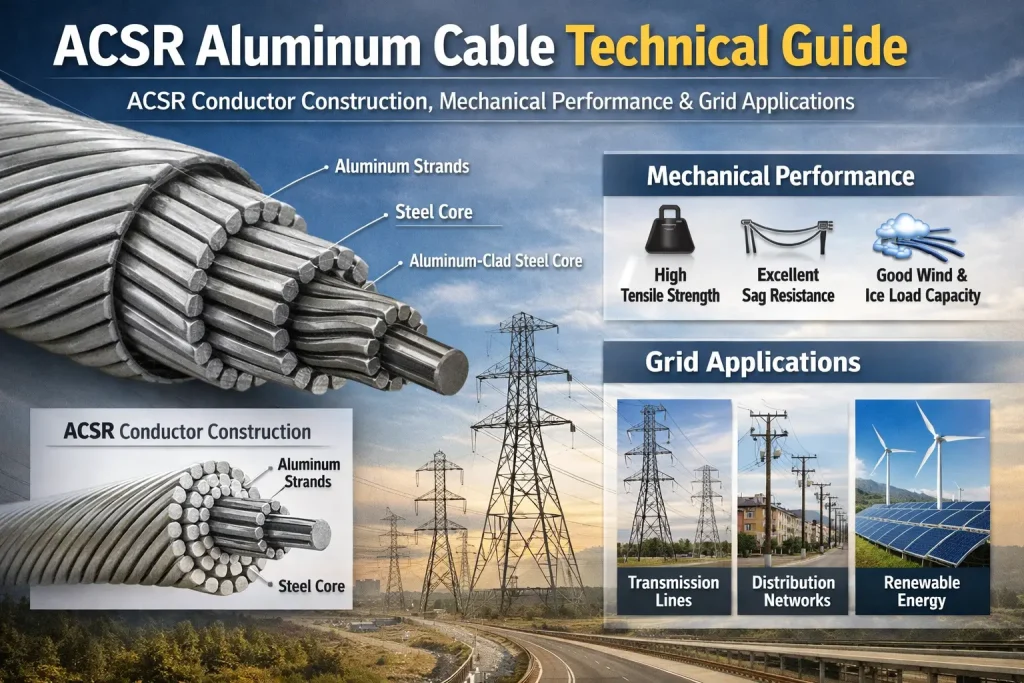
ACSR (Aluminum Conductor Steel Reinforced) cable is a type of overhead conductor that combines lightweight aluminum strands with a central steel core. The aluminum strands carry electrical current, while the steel core provides the mechanical strength required for long-span installations and demanding environmental conditions.
This unique construction enables ACSR cable to support higher mechanical loads while maintaining excellent conductivity, making it suitable for transmission and distribution networks of all sizes.
Basic Structure of ACSR Cable
An ACSR conductor typically consists of:
- Outer layers of hard-drawn aluminum wires
- Central galvanized steel core
- Multiple stranding configurations depending on application requirements
The aluminum layers maximize electrical conductivity, while the steel reinforcement enhances tensile strength and reduces conductor sag.
Why ACSR Cable Remains the Industry Standard
Utilities and power project developers continue to rely on ACSR cable because it addresses several critical challenges in overhead line construction.
High Tensile Strength
One of the biggest concerns in transmission projects is maintaining conductor stability across long spans. The steel core significantly improves tensile strength, allowing the conductor to withstand heavy mechanical loads.
This feature is especially valuable in:
- Mountainous terrain
- River crossings
- Long-distance transmission routes
- Areas exposed to strong winds
Excellent Cost-to-Performance Ratio
Compared with many alternative conductor types, ACSR cable provides a strong balance between performance and affordability.
Utilities can achieve reliable transmission performance while controlling project costs, making ACSR a practical solution for large-scale infrastructure development.
Proven Reliability
ACSR conductors have been used successfully for decades in transmission networks worldwide. Their long operational history gives utilities confidence in long-term performance and maintenance predictability.
Suitable for Various Voltage Levels
ACSR conductors are commonly used in:
- Medium-voltage distribution systems
- High-voltage transmission lines
- Extra-high-voltage power networks
- Utility grid expansion projects
Key Benefits of ACSR Cable
Reduced Conductor Sag
Excessive sag can create safety concerns and increase infrastructure maintenance requirements. The steel-reinforced core helps minimize sag, particularly under high-temperature operating conditions.
Enhanced Mechanical Durability
ACSR conductors are designed to withstand:
- Wind loading
- Ice accumulation
- Mechanical tension
- Environmental stress
This durability contributes to longer service life and improved system reliability.
Efficient Electrical Performance
The aluminum strands offer excellent conductivity while keeping overall conductor weight relatively low. This allows utilities to maintain efficient power transmission without excessive structural requirements.
Wide Industry Acceptance
Because ACSR is globally recognized, engineers, contractors, and procurement teams can easily access design standards, installation expertise, and maintenance support.
Common Applications of ACSR Cable
Power Transmission Lines
ACSR cable is widely used in high-voltage and extra-high-voltage transmission systems where long spans and mechanical strength are critical.
Utility Distribution Networks
Electric utilities frequently deploy ACSR conductors in distribution networks to deliver power across cities, towns, and rural communities.
Industrial Power Infrastructure
Large industrial facilities often require robust overhead conductor systems capable of handling substantial electrical loads while maintaining operational reliability.
Renewable Energy Projects
Wind farms and solar power facilities commonly utilize ACSR conductors to connect generation assets to substations and transmission grids.

ACSR vs AAC and AAAC Conductors
Selecting the right conductor requires understanding how ACSR compares to other popular options.
AAC (All Aluminum Conductor)
AAC conductors offer high conductivity but lower mechanical strength. They are generally suitable for short-span applications where mechanical loading is less demanding.
AAAC (All Aluminum Alloy Conductor)
AAAC conductors provide better corrosion resistance and improved strength compared to AAC. However, they may not match the tensile performance of steel-reinforced ACSR conductors.
ACSR (Aluminum Conductor Steel Reinforced)
ACSR remains the preferred choice when projects require:
- Long spans
- High tensile strength
- Reduced sag
- Challenging environmental conditions
- Cost-effective transmission solutions
Factors to Consider When Purchasing ACSR Cable
Conductor Size and Ampacity
The selected conductor must meet current-carrying requirements while complying with project specifications and utility standards.
Environmental Conditions
Project locations influence conductor selection. Engineers should evaluate:
- Wind speeds
- Temperature variations
- Ice loading conditions
- Corrosive environments
Mechanical Load Requirements
Span length and tower design directly affect conductor performance. Proper mechanical analysis helps ensure safe and reliable operation.
Compliance with International Standards
Buyers should verify that ACSR conductors comply with applicable standards and testing requirements to ensure quality and long-term reliability.
Manufacturer Capability
Choosing an experienced manufacturer is critical for ensuring consistent product quality, timely delivery, and technical support throughout the project lifecycle.
Why Utilities Choose HNBF Power for ACSR Cable Solutions
HNBF Power is a professional manufacturer specializing in overhead conductors and power cable solutions for global utility, industrial, and EPC markets.
The company’s product portfolio includes:
- ACSR conductors
- AAC conductors
- AAAC conductors
- ABC cables
- LV power cables
- Concentric cables
By combining advanced manufacturing processes, strict quality control systems, and international project experience, HNBF Power delivers conductor solutions designed to meet modern grid performance requirements.
Whether supporting transmission upgrades, rural electrification programs, renewable energy projects, or utility network expansion, HNBF Power provides dependable conductor products tailored to project-specific needs.
Future Outlook for ACSR Cable
As electricity demand continues to rise worldwide, utilities face increasing pressure to improve transmission efficiency and grid reliability. Despite the emergence of advanced conductor technologies, ACSR cable remains a practical and trusted solution due to its proven performance, affordability, and mechanical strength.
For many transmission and distribution applications, ACSR continues to offer the ideal balance between electrical performance, durability, and investment value.
Conclusion
ACSR cable remains one of the most important conductor technologies in modern power transmission and distribution systems. Its combination of aluminum conductivity and steel reinforcement provides the mechanical strength, reliability, and efficiency required for demanding utility applications.
For utilities, EPC contractors, and infrastructure developers seeking durable overhead conductor solutions, ACSR cable continues to be a proven investment that supports long-term grid performance and operational stability.
Frequently Asked Questions (FAQs)
What does ACSR stand for?
ACSR stands for Aluminum Conductor Steel Reinforced, a conductor consisting of aluminum strands surrounding a steel core.
Why is steel used inside ACSR cable?
The steel core provides additional tensile strength, allowing the conductor to support longer spans and withstand greater mechanical loads.
Where is ACSR cable commonly used?
ACSR cable is widely used in overhead transmission lines, distribution networks, renewable energy projects, and industrial power systems.
What are the advantages of ACSR over AAC conductors?
ACSR offers significantly higher tensile strength, reduced sag, and better suitability for long-span installations.
How long does an ACSR conductor typically last?
When properly installed and maintained, ACSR conductors can provide reliable service for several decades, depending on operating conditions and environmental factors.
Contact HNBF Power for Customized ACSR Solutions
Looking for reliable ACSR cable solutions for your transmission or distribution project? Contact HNBF Power today to discuss your technical requirements, conductor specifications, and customized manufacturing needs. Our team is ready to provide tailored solutions that help utilities, EPC contractors, and infrastructure developers achieve dependable and efficient power delivery.